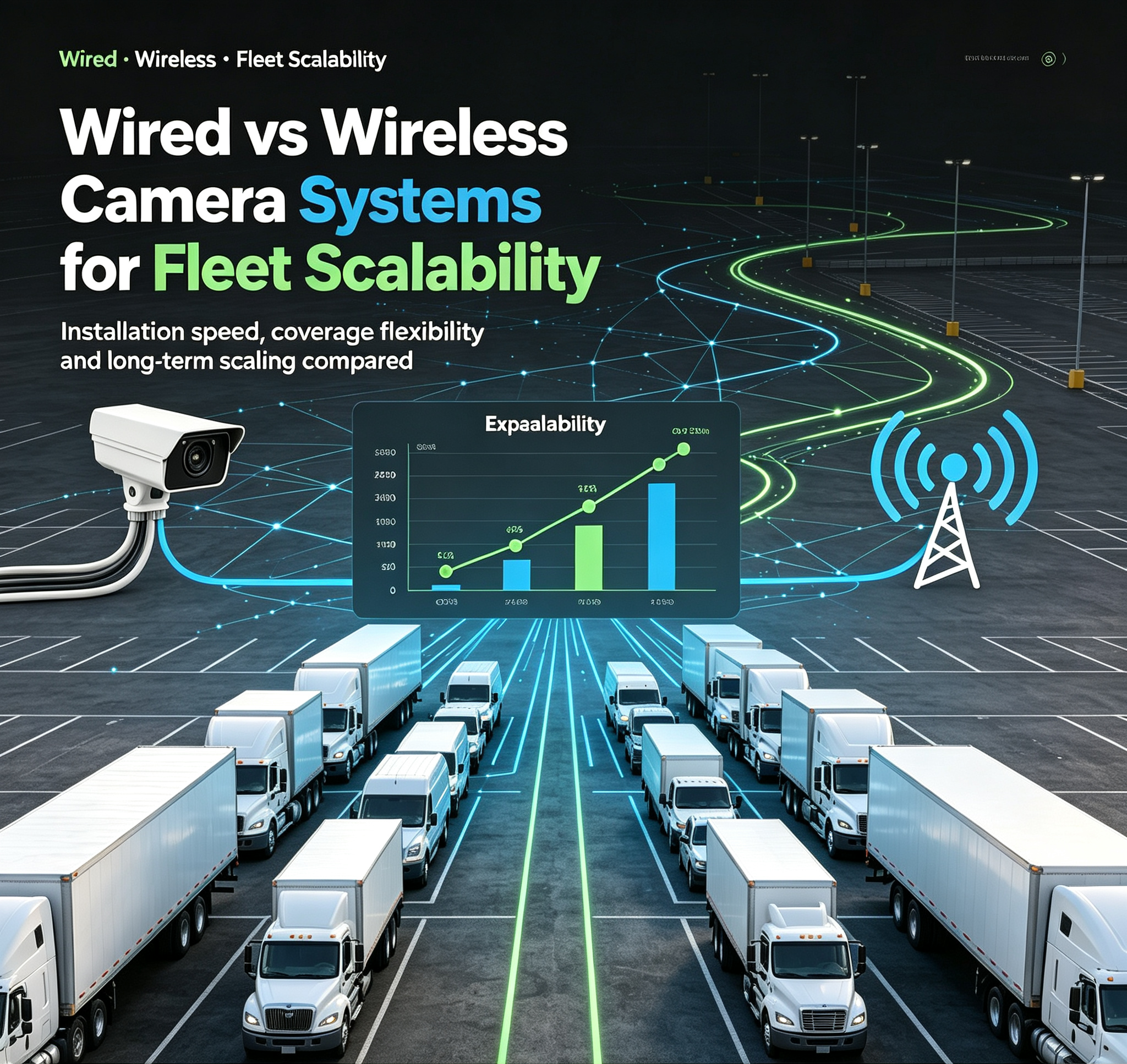
Wired vs Wireless Camera Systems for Fleet Scalability
Fleet Scalability is achieved when a camera architecture can be deployed, supported, and expanded consistently across many vehicles. Both a Wired Vehicle Camera System and a Wireless Vehicle Camera System can scale when properly standardized.
Standardize the vehicle design
A Fleet Camera System should define approved camera positions, recorder settings, monitor behavior, cable or antenna locations, and acceptance tests. Standardization reduces variation in a Commercial Vehicle Camera System rollout.
Scaling wired installations
A Wired Vehicle Camera System can scale efficiently when fleets use repeatable harnesses and installation drawings. The main challenge is often labor, especially when cable routing differs across vehicle models. That labor directly affects Vehicle Camera Installation Cost.
Scaling wireless installations
A Wireless Vehicle Camera System may shorten certain retrofit tasks, but configuration, antenna placement, power, interference testing, and pairing should be standardized. A Wireless Monitoring System needs consistent acceptance criteria across the fleet.
Central fleet visibility
Wireless Fleet Monitoring can support centralized operations by providing selected remote information. This is a separate scalability layer from the local Wireless Monitoring System connecting cameras within a vehicle.
Maintenance at fleet scale
Spare cameras, connectors, antennas, recorders, configuration records, and technician training should be standardized. A Fleet Camera System becomes difficult to scale when each vehicle requires unique troubleshooting.
Measure deployment performance
Track Vehicle Camera Installation Cost, technician hours, vehicle downtime, defects, service calls, and replacement time. These metrics show whether a Wired Vehicle Camera System or Wireless Vehicle Camera System is actually improving Fleet Scalability.
Use hybrid designs selectively
A Commercial Vehicle Camera System can use wired connections for permanent critical views and wireless links for difficult or detachable locations. Hybrid designs should still be standardized rather than customized without controls.
As the fleet grows, Wireless Fleet Monitoring may provide operational benefits through remote access, but data costs and management should be included in the architecture. A disciplined Wireless Monitoring System deployment can scale well when radio conditions and power requirements are validated.
Ultimately, Fleet Scalability comes from repeatable engineering and operations. The best Fleet Camera System is the one the organization can install and maintain consistently across its vehicle population.