Emergency calling is becoming a regulatory bridge between passive crash protection and connected-vehicle electronics. This article explores the 2026 eCall opportunity, including telematics control units, cellular connectivity, GNSS positioning, antennas, microphones, crash signals, backup power and software. It explains how mandatory emergency communication can establish a hardware baseline that supports additional connected services while demanding robust validation and regional network compatibility.
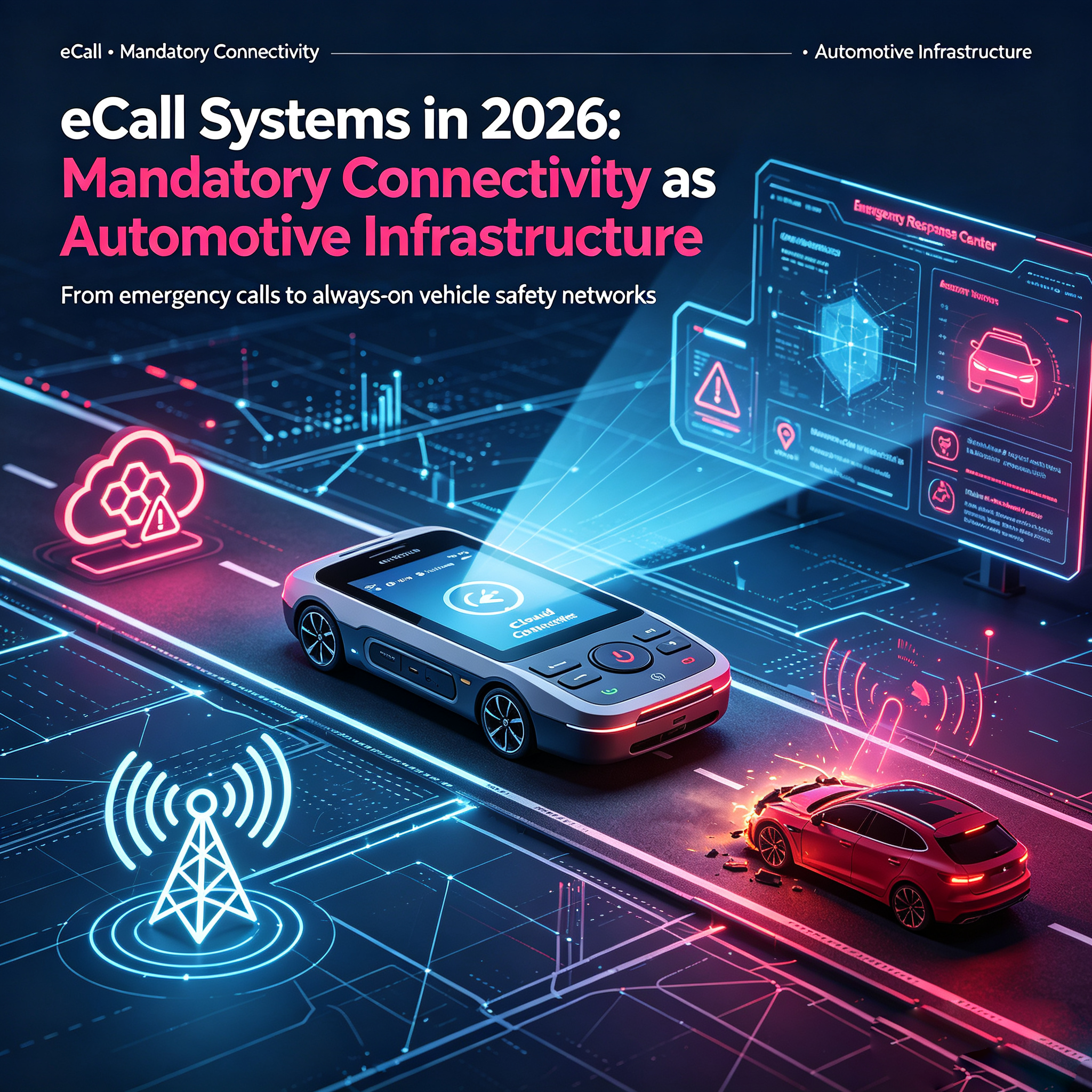
eCall in 2026: When Emergency Communication Becomes Vehicle Infrastructure
Emergency-call requirements change the economics of vehicle connectivity. A function designed to summon help after a serious crash requires several electronic domains to work together under difficult conditions.
1. The Mandatory Connectivity Stack
A typical architecture combines crash-trigger information, a telematics control unit, cellular modem, GNSS positioning, antenna systems, audio interfaces and backup power. The system must communicate reliably even when a collision disrupts normal vehicle power or networks.
2. Compliance Drives Integration
Because emergency calling depends on multiple subsystems, suppliers need more than a modem. Hardware, embedded software, network behavior, diagnostics and vehicle interfaces must be validated as a complete safety-related function.
3. A Platform for Additional Services
Once mandatory connectivity hardware is installed, OEMs may reuse parts of the architecture for diagnostics, fleet services, software support and connected features. Regulation can therefore establish the base hardware while commercial services improve platform economics.
Regional Complexity Protects Expertise
Network technologies, emergency infrastructure, certification procedures and data requirements vary by market. Suppliers with regional engineering knowledge and adaptable telematics platforms can reduce launch risk and become difficult to replace after qualification.