Commercial Fleet Digital Transformation: Why On-Board Electronics Have Evolved from Optional to Standard Equipment
The commercial transportation industry is entering a new era of intelligent operations. Digital transformation is no longer limited to enterprise software or cloud-based logistics platforms. Today, the vehicle itself has become a critical source of operational data, safety management, and business intelligence.
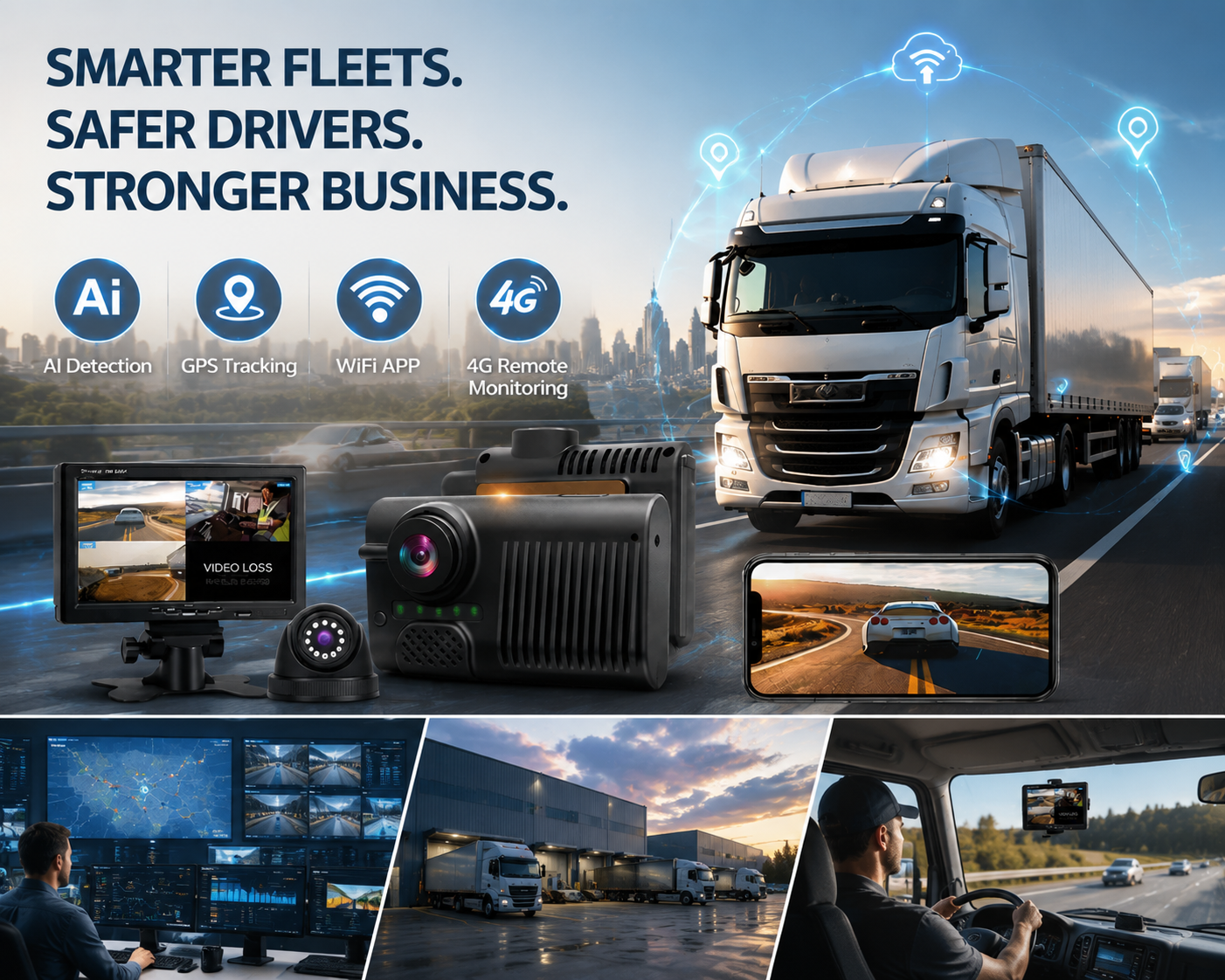
A professional Vehicle Camera system provides continuous video coverage around the vehicle, enabling fleet managers to improve safety, reduce insurance costs, and monitor driver performance. Modern Vehicle Camera solutions also integrate artificial intelligence capable of recognizing unsafe driving behaviors, lane departures, pedestrian detection, and collision warnings. With cloud connectivity, a Vehicle Camera allows managers to review incidents remotely and analyze operational data across hundreds or thousands of vehicles. As digital fleets continue to evolve, the Vehicle Camera has become an essential component of intelligent transportation. Companies implementing Vehicle Camera technology gain higher operational visibility, better compliance, and stronger customer confidence. A well-deployed Vehicle Camera also supports driver coaching and incident review.
Alongside camera technology, the Dash Cam has become another indispensable device for commercial vehicles. Every professional fleet benefits from installing a reliable Dash Cam that continuously records road events and provides objective evidence in the event of accidents or insurance disputes. A modern Dash Cam often integrates GPS tracking, cloud storage, AI analytics, and remote access. Fleet managers use Dash Cam footage to improve driver coaching, investigate incidents efficiently, and strengthen overall fleet safety. As commercial transportation becomes increasingly data-driven, a high-quality Dash Cam is now a fundamental operational tool.
Why Vehicle Electronics Are Becoming Standard Equipment
Improved Driver Safety
AI-powered monitoring systems identify distracted driving, fatigue, speeding, and dangerous behaviors before accidents occur.
Better Fleet Visibility
Connected electronics provide real-time information about vehicle location, driver status, route progress, and cargo conditions.
Lower Operating Costs
Predictive maintenance, optimized routing, fewer accidents, and improved fuel efficiency generate long-term savings.
Regulatory Compliance
Electronic records improve accountability and simplify audit preparation.
Data-Driven Decisions
Fleet operators can analyze operational data to improve scheduling, vehicle utilization, maintenance planning, and business performance.