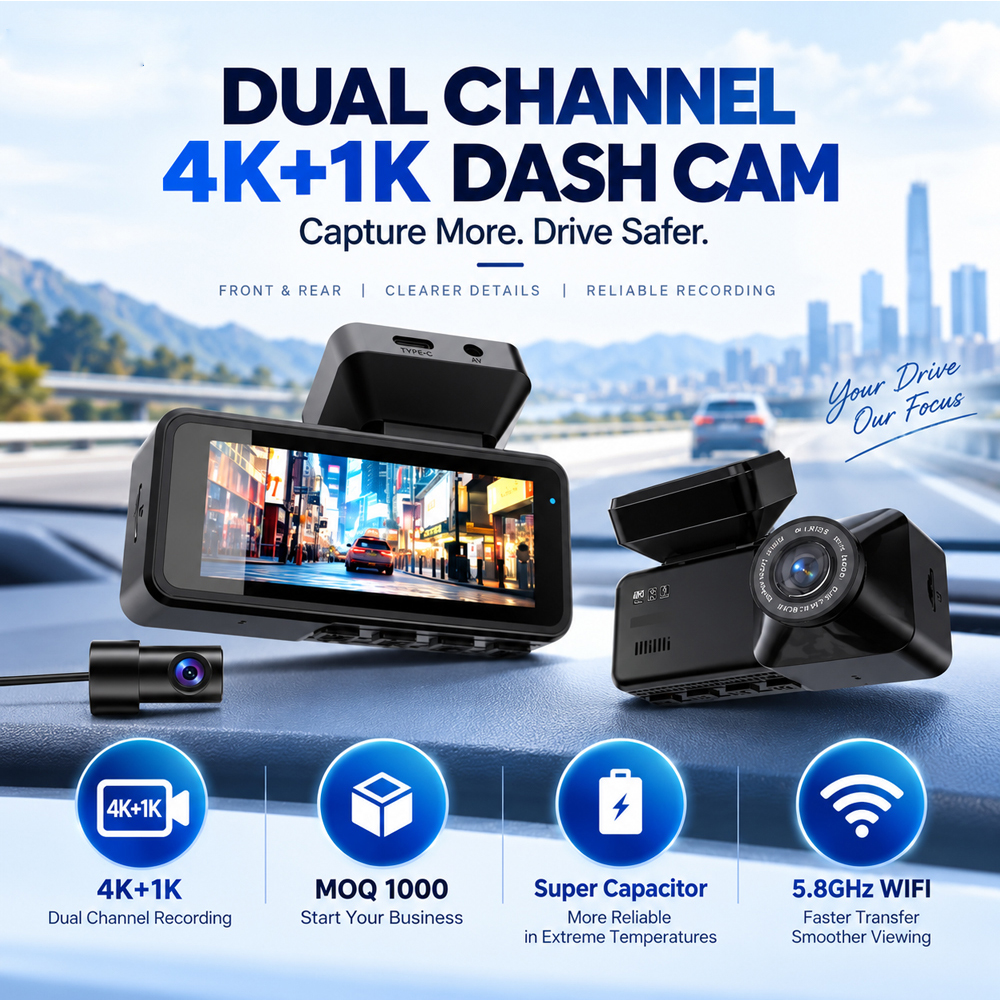
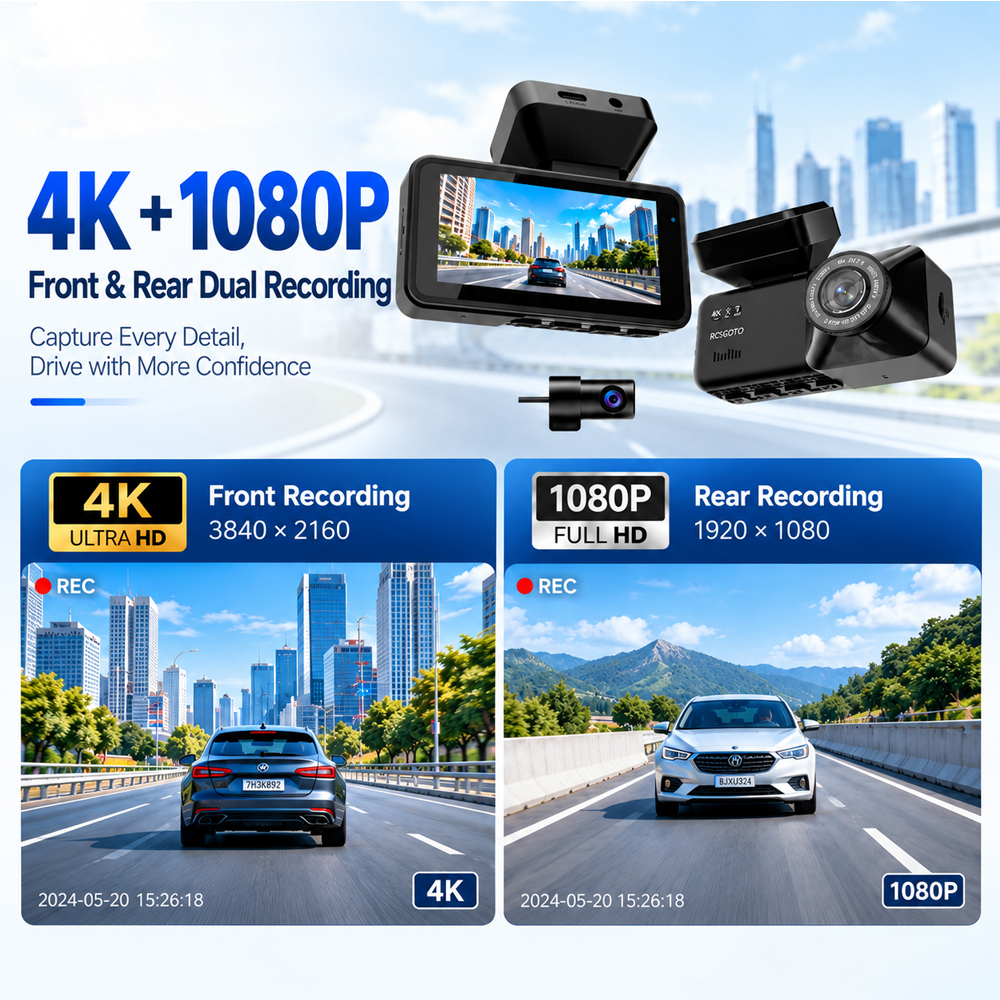
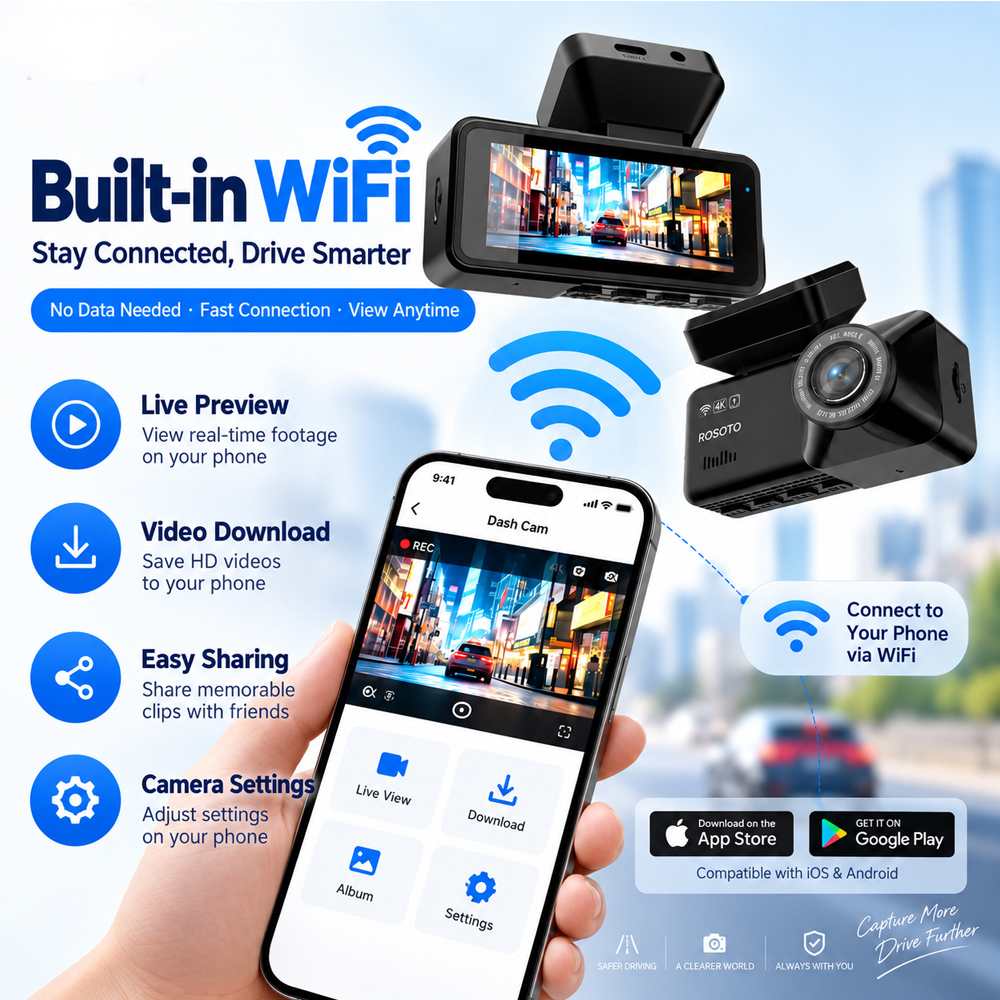
If you’re shopping for a dash cam, you’ve probably wondered if a4k dash camis worth the extra upfront cost. For new buyers, the price gap between 4K and standard 1080p models can feel confusing.
This guide breaks down the 3-year total cost of ownership and ROI for both options. We’ll cover upfront costs, hidden fees, and real-world savings to help you make the right choice.
The first thing most buyers notice is the sticker price. But upfront cost is only part of the total 3-year expense.
4K Dash CamInitial Purchase Cost
A basic4k car cameracosts between $80 and $150 for a single front cam. A4k front and rear dash camusually runs $120 to $200.
Entry-level 4K model: $80–$100
Mid-tier 4K with WiFi: $100–$150
Premium 4K dual cam: $150–$200
Add-ons like a4k dash camhardwire kitcost $15–$30 extra if you want parking mode. Awireless4k dash cammay cost $20 more than a wired version.
Standard Dash Cam Initial Purchase Cost
A standard 1080p dash cam costs $30 to $80 for a single cam. Dual 1080p models cost $60 to $100.
Basic 1080p single cam: $30–$50
Mid-tier 1080p dual cam: $50–$80
Premium 1080p with WiFi: $80–$100
At first glance, standard models look cheaper. But over 3 years, the gap shrinks when you factor in replacement and repair costs.
ROI isn’t just about purchase price. It includes maintenance, replacements, and hidden fees over time.
Standard Dash Cam 3-Year Total Cost
Standard 1080p cams often use cheaper parts. Many need replacement after 1.5–2 years due to sensor failure or battery issues.
2x replacement cams: $60–$100 total
2x memory card replacements: $20–$40
Repair labor (if applicable): $20–$50
Total 3-year cost: $130–$270
Standard cams also lack advanced features that save you money after accidents. You may pay more out of pocket for claims without clear footage.
4K Dash Cam3-Year Total Cost
A high-qualitydash camera 4kmodel typically lasts 3–5 years with proper care. Most come with 1–2 year warranties.
1x 4K cam purchase: $80–$200
1x memory card upgrade: $15–$30
Hardwire kit (optional): $15–$30
Total 3-year cost: $110–$260
Over 3 years, the total cost is nearly identical to a standard cam. But you get much better footage and more safety features.
3. Real-World ROI: Savings and Safety Benefits
The biggest value of a4k dash camcomes from money it saves you, not just what it costs.
Accident Claim and Insurance Savings
Clear 4K footage can prove fault in accidents, saving you from deductible payments and rate hikes. A4k dash camwith g sensorautomatically locks accident footage.
Average accident deductible: $500–$1,000
Insurance rate increase after at-fault accident: $300–$600 per year
Potential 3-year savings: $1,100–$2,200
Adash cam 4k ultra hdcaptures license plates and street signs that 1080p cams miss. A4k dash camwith hdralso delivers clearer footage in bright or dark conditions.
Advanced 4K models include features that prevent accidents altogether.
A
4k dash camwith lane departure warningalerts you if you drift out of your lane
A
4k dash camwith night visionimproves visibility for late-night driving
A
4k dash camwith parking monitorrecords hits while your car is parked
For example, a4k dash camfor delivery driverscan reduce parking lot hit-and-run costs by 70%, according to fleet safety studies. Delivery drivers save an average of $400 per year on false claims.
4. Who Should Buy a4K Dash Cam?
A4k dash camisn’t right for everyone. But for many users, the ROI is clear within the first year.
Individual Drivers and Daily Commuters
If you drive 10,000+ miles per year, a 4K cam pays for itself quickly. It’s also ideal if you park on public streets.
Commuters in high-traffic areas
Drivers who park in busy lots or on streets
Parents who want extra safety for teen drivers
Even casual drivers benefit from clear footage in case of minor fender benders. The 3-year cost difference is often less than $50 for mid-tier models.
Business Owners and Bulk Buyers
For fleets and resellers,4K dash cams offer better long-term value and lower replacement costs.
- 4K dash camwholesale distributor
clients save 20–30% on bulk orders
A
4K dash camimportercan offer higher-margin products than standard cams
A
4K dash camwholesalersees lower return rates for 4K models
Fleet managers report 25% fewer accident claims after switching to 4K cams. The ROI for commercial use is often under 6 months.
Final Verdict: Over 3 years, a 4k dash cam costs about the same as a standard cam — but delivers 2–3x more value through savings and safety. For most drivers, it’s the better long-term investment.