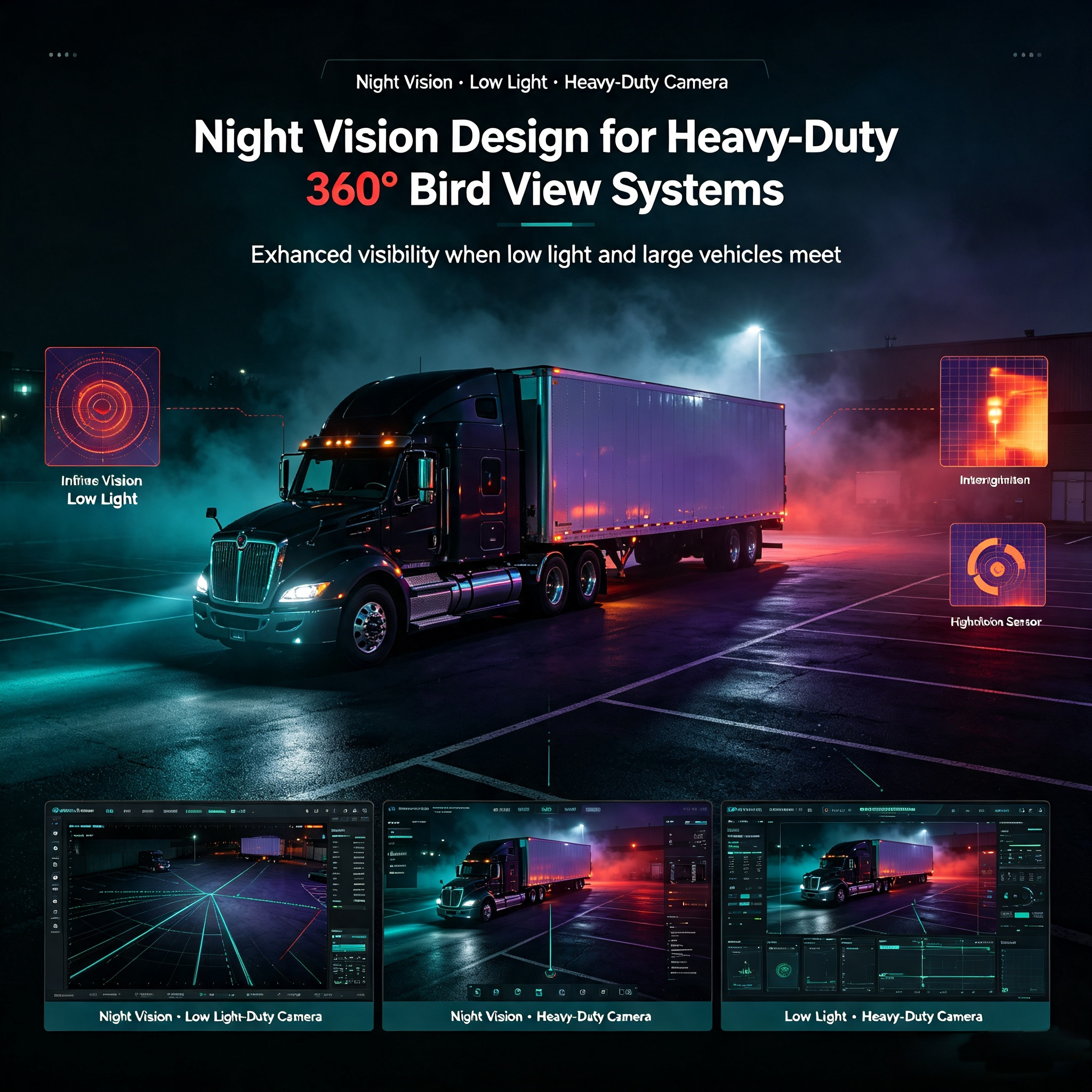
Night Vision Design for Heavy-Duty 360° Bird View Systems
Night operation places different demands on a surround-view system. This article explains sensor sensitivity, infrared support, glare control, monitor brightness and validation methods for fleets that need dependable visibility in depots, construction sites and poorly lit roads.
The solution combines 360° Bird View System, Heavy-duty Vehicle, Blind Spot Elimination, Image Stitching, Camera Calibration, Distortion Correction, Night Vision, Fleet Safety, Accident Avoidance, and Return on Investment.
Low-Light Image Quality
A useful night image must preserve object boundaries without excessive noise or motion blur. Sensor size, lens aperture, gain strategy and processing latency all affect whether a driver can identify pedestrians, barriers and nearby equipment.
Infrared and Glare Management
Infrared illumination can extend visibility, but reflective surfaces and dust may cause flare. Camera placement, shielding and automatic exposure control should be validated around headlights, work lamps and reflective clothing.
Driver Display and Human Factors
The monitor should remain readable without overwhelming the cab. Brightness control, contrast, view switching and warning design should support fast recognition during reversing and turning maneuvers.
Field Validation
Test the system in real yards, loading docks and unlit routes. Include rain, dust, opposing headlights and dirty lenses. Record whether critical objects remain detectable at operational distances.
For governance, teams should review 360° Bird View System, Heavy-duty Vehicle, Blind Spot Elimination, Image Stitching, Camera Calibration, Distortion Correction, Night Vision, Fleet Safety, Accident Avoidance, and Return on Investment together rather than as isolated features.