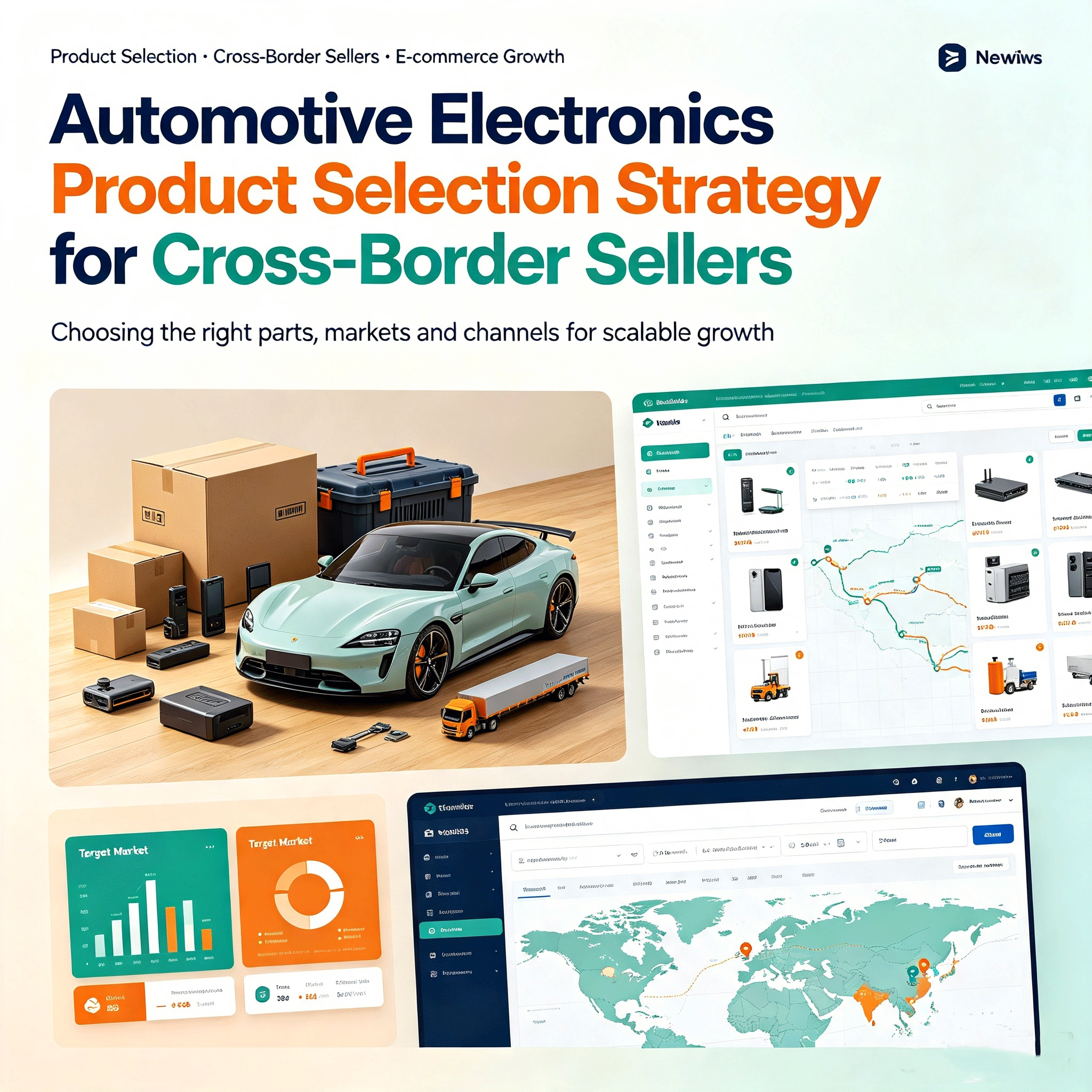
Automotive Electronics Product Selection Strategy for Cross-Border Sellers
Winning in Automotive Electronics starts before a listing goes live. In Cross-border E-commerce, a disciplined Product Selection Strategy helps sellers avoid inventory traps and prioritize products with sufficient demand, defensible margins, manageable compliance, and clear customer value.
Start With Customer Problems
Identify practical use cases such as connectivity, charging, monitoring, replacement, safety, entertainment, and installation convenience. A Product Selection Strategy should score each opportunity by demand, selling price, gross margin, review concentration, seasonality, defect exposure, and vehicle compatibility.
Validate Marketplace Demand
Global E-commerce Platforms provide different signals through search results, reviews, bestseller positions, advertising data, and customer questions. Cross-border E-commerce teams should compare multiple Global E-commerce Platforms rather than assuming demand is identical across countries.
Map the Competitive Landscape by studying price bands, specifications, bundles, warranty promises, images, negative reviews, and seller concentration. The Competitive Landscape can expose gaps where better compatibility information, installation support, or product quality creates differentiation.
Screen Compliance Before Sourcing
Product Compliance Certification can materially change launch cost and lead time. Electronics with wireless functions, batteries, chargers, or specific materials may require additional documentation or testing. Product Compliance Certification should therefore be part of the initial SKU scorecard.
FCC CE RoHS Certification considerations should be validated according to the product and destination market. Do not treat FCC CE RoHS Certification as a universal checklist; determine which rules actually apply and maintain evidence at SKU level.
Estimate True Contribution Margin
Model purchase cost, packaging, duties, platform fees, advertising, Cross-border Logistics, storage, returns, replacements, and support. Cross-border Logistics can turn a seemingly attractive product into a weak investment when dimensional weight or reverse shipping is high.
Design for Conversion and Support
Before ordering stock, plan Listing Optimization around the questions customers need answered: fitment, connectors, voltage, dimensions, supported systems, installation, and package contents. Strong Listing Optimization reduces uncertainty and can lower avoidable returns.
Finally, include After-sales System Construction in product evaluation. If a SKU requires complex troubleshooting, the cost of support must be included in the business case. After-sales System Construction is especially important when installation quality directly affects perceived product quality.