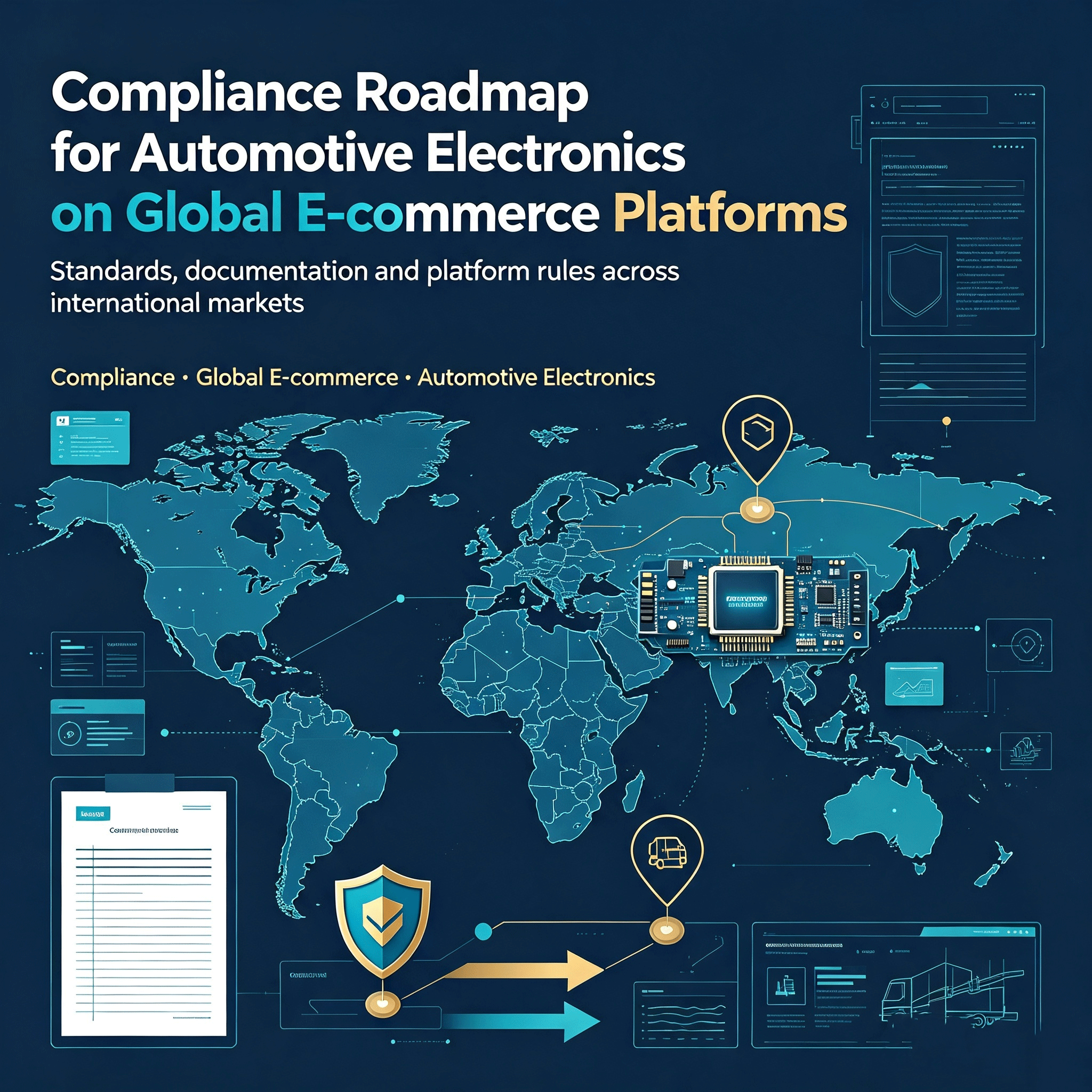
Compliance Roadmap for Selling Automotive Electronics Across Global E-commerce Platforms
Product Compliance Certification is a foundational requirement for scaling Automotive Electronics through Cross-border E-commerce. Sellers need to identify applicable rules early, collect reliable evidence, and maintain documentation that matches the actual product being sold.
Map Requirements by SKU and Market
Start by documenting product functions, power source, wireless capabilities, materials, accessories, intended use, and destination countries. Product Compliance Certification should be evaluated at SKU level because similar-looking products can have different regulatory obligations.
FCC CE RoHS Certification is a common search phrase for electronics compliance, but each framework has its own scope. Sellers should verify whether FCC CE RoHS Certification requirements apply to the specific product and market instead of relying solely on supplier claims.
Build a Compliance Evidence File
Maintain test reports, declarations, certificates where applicable, product photos, labels, manuals, model numbers, supplier information, and version history. This documentation supports faster responses when Global E-commerce Platforms request evidence or when a listing is reviewed.
Connect Compliance With Product Selection
A Product Selection Strategy should include expected testing cost, lead time, renewal requirements, labeling changes, and documentation quality. Products with attractive demand may still be poor choices when compliance uncertainty creates excessive launch risk. A mature Product Selection Strategy incorporates regulatory feasibility before purchasing inventory.
Monitor the Competitive Environment
The Competitive Landscape can provide clues about expected specifications and customer standards, but competitors are not a substitute for regulatory analysis. Study the Competitive Landscape for commercial positioning while using qualified compliance resources for legal requirements.
Align Listings and Logistics
Listing Optimization should accurately reflect tested specifications and avoid unsupported claims. Effective Listing Optimization also ensures model numbers, product functions, package contents, and warnings are consistent with compliance documentation.
Cross-border Logistics must account for batteries, dangerous-goods classifications where applicable, customs descriptions, and carrier restrictions. Cross-border Logistics teams should receive current product documentation before shipment.
Prepare Post-Sale Controls
After-sales System Construction should capture safety complaints, recurring failures, compatibility issues, and suspected defects. After-sales System Construction gives the business an early-warning mechanism and supports corrective actions when product quality or documentation needs improvement.
For Cross-border E-commerce sellers, compliance is not a one-time certificate collection exercise. It is a controlled process connecting suppliers, laboratories, marketplace operations, logistics, and customer support across Global E-commerce Platforms.