Profit Model Optimization for a Complete Solution Provider Transformation
来源:
|
作者:Samaeye
|
发布时间 :2026-08-19
|
3 次浏览:
|
🔊 点击朗读正文
❚❚
▶
|
Share:
This article explains how automotive retrofit providers can turn operational maturity into sustainable profit. It covers customer-level margin measurement, cost allocation, labor standardization, reusable engineering, recurring service contracts, lifecycle pricing, customer value reporting, organizational roles, and performance incentives. The goal is to help solution providers move beyond device markup and create a business model that rewards repeatable delivery, retention, service quality, and reusable technical knowledge.
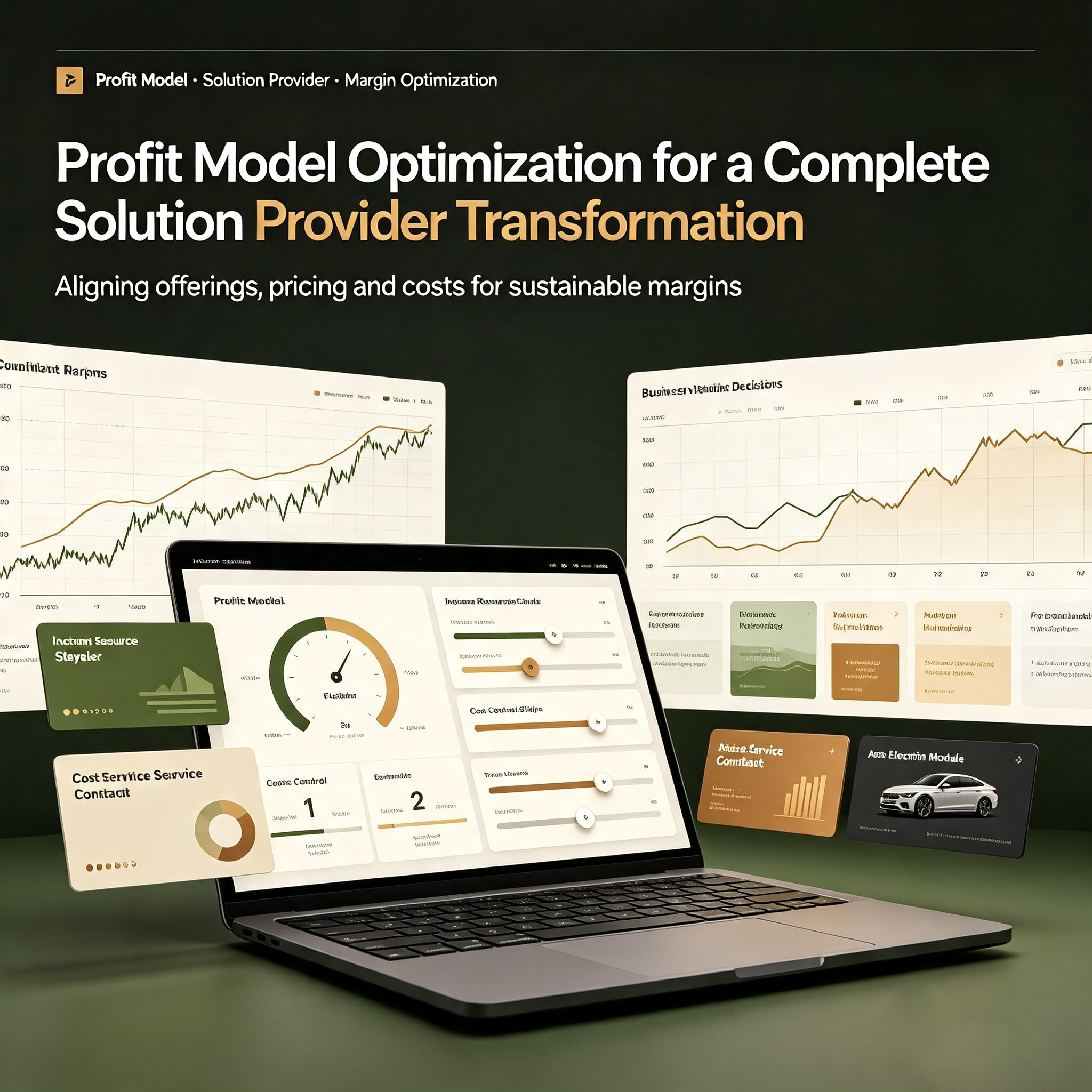
The final stage of the Business Upgrade Path is economic discipline. An Automotive Refitting Shop can standardize work, engineer integrated systems, and build recurring services, yet still struggle if pricing does not reflect engineering effort, risk, support obligations, and account complexity. Profit Model Optimization turns operational maturity into durable earnings and completes the commercial logic of Solution Provider Transformation.
1. Measure profitability by customer and service type
Separate revenue streams. Track hardware, labor, engineering, project management, software, maintenance, training, travel, and emergency support independently.
Allocate real costs. Include presales surveys, rework, warranty handling, failed appointments, spare stock, technical escalation, and account management.
Review contribution margin. A large fleet account is not automatically attractive if custom work and service demands consume excessive labor.
2. Use operational standards to protect margin
Control labor variance. A Standardized Installation Process creates predictable cycle times and makes quoting more accurate.
Reduce engineering duplication. An Integrated Vehicle Solution should reuse approved modules, drawings, interfaces, and configuration templates where possible.
Design for serviceability. Commercial Vehicle Electronics systems that are easier to diagnose and replace lower warranty and maintenance costs.
3. Build recurring revenue into the commercial model
Sell managed outcomes. A Fleet Service Model can combine deployment, asset records, reporting, and support into a recurring contract.
Price lifecycle support. An After-sales Maintenance Service should reflect response time, coverage hours, geography, spare-parts commitments, and supported technologies.
Use renewal data. Service history and vehicle replacement schedules create natural opportunities for contract renewal and technology refresh.
4. Make customer value visible
Build a baseline. Customer Value Enhancement needs before-and-after measures such as downtime, incident handling time, repeat faults, compliance effort, or asset utilization.
Report outcomes regularly. Quarterly business reviews can connect technical service data with fleet operational results.
Share improvement plans. Use evidence to recommend process changes, maintenance actions, or phased technology upgrades.
5. Complete the organizational shift
Separate roles. Mature providers typically need clearer ownership for solution design, project delivery, quality, service operations, key accounts, and commercial management.
Reward lifecycle performance. Incentives should consider retention, recurring revenue, project quality, service response, and account margin—not only product sales.
Build reusable intellectual property. Vehicle templates, diagnostics knowledge, installation standards, solution modules, and service data become strategic assets that competitors cannot easily copy.
The result is a business that competes on repeatable outcomes rather than device prices. It can enter a customer relationship through installation, expand through system integration, retain the account through fleet operations and maintenance, and improve margin through disciplined pricing and reusable technical knowledge.
Strategic alignment: The roadmap connects the Business Upgrade Path of an Automotive Refitting Shop with a Standardized Installation Process, an Integrated Vehicle Solution, stronger Commercial Vehicle Electronics capabilities, a scalable Fleet Service Model, a dependable After-sales Maintenance Service, measurable Customer Value Enhancement, disciplined Profit Model Optimization, and the long-term goal of Solution Provider Transformation.