Rear visibility mandates show how regulation can establish cameras and displays as baseline vehicle electronics rather than premium convenience features. This article examines the 2026 market for camera modules, image processors, displays, wiring, diagnostics and environmental validation. It also explains how a compliance-driven camera architecture can become a foundation for parking assistance and broader vision functions, increasing the strategic value of qualified imaging suppliers.
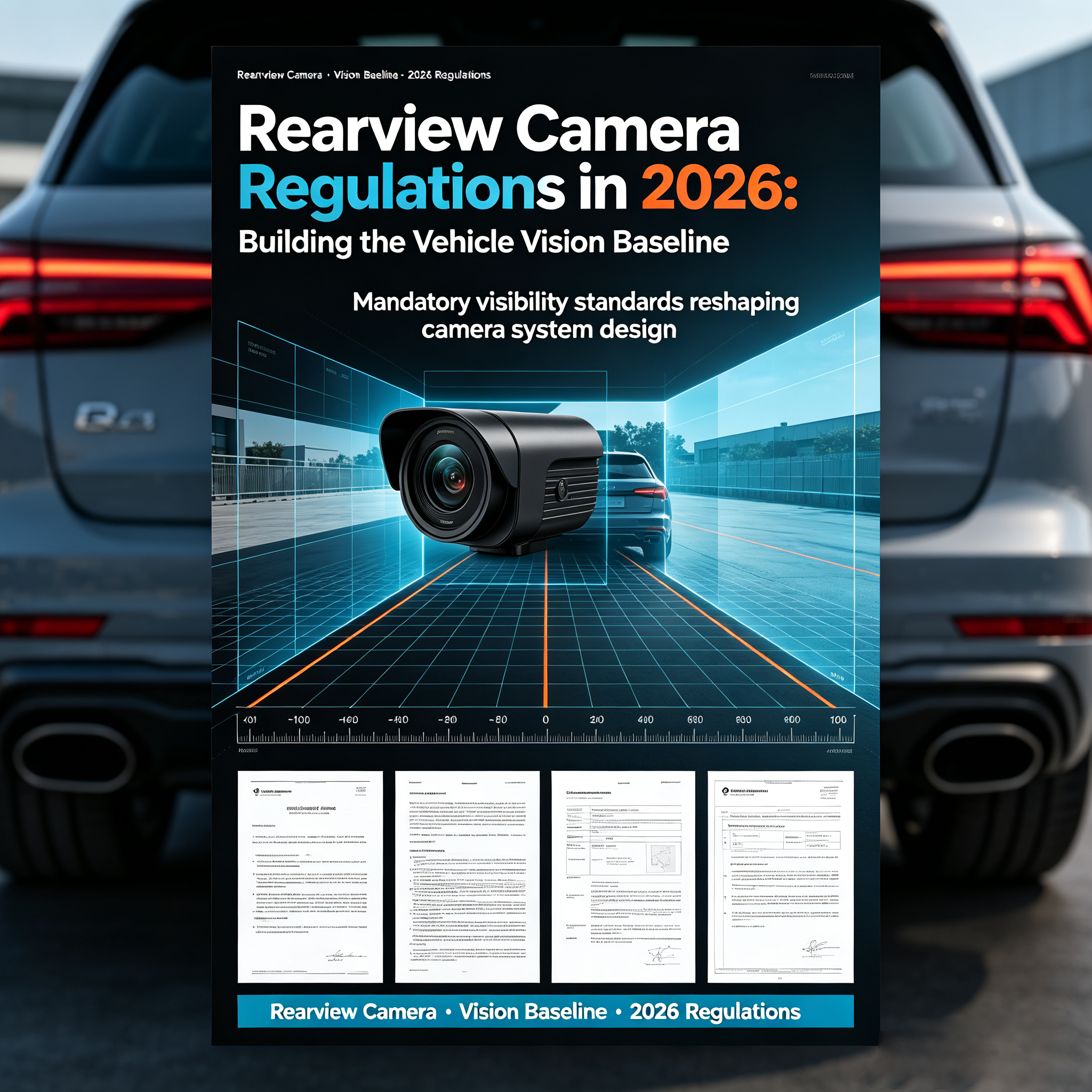
Rearview Camera Rules in 2026: Regulation as the Foundation of Vehicle Vision
Rear visibility requirements have permanently changed vehicle electronic content. Once a defined rear field of view becomes mandatory, cameras, displays and associated processing move from optional equipment toward baseline architecture.
1. The Compliance Imaging Chain
A rearview function depends on camera optics, image sensors, processing, wiring, displays, software and diagnostics. Engineers must maintain useful visibility across temperature, vibration, moisture, glare and low-light conditions.
2. Validation Creates a Quality Moat
Automotive cameras are exposed to demanding environments, and compliance performance must remain stable over time. Suppliers with proven sealing, optical calibration, electromagnetic compatibility and manufacturing traceability can reduce OEM validation risk.
3. From Mandatory Camera to Vision Platform
Once a vehicle includes compliant imaging hardware, manufacturers can build parking assistance and other vision features on related infrastructure. Shared displays, processors and networks can improve the economics of adding higher-value functionality.
Global Opportunity
As more markets strengthen rear-visibility expectations, scalable camera platforms can serve multiple regions. The winners are likely to combine cost-efficient hardware with robust software, diagnostics, validation evidence and regional homologation support.