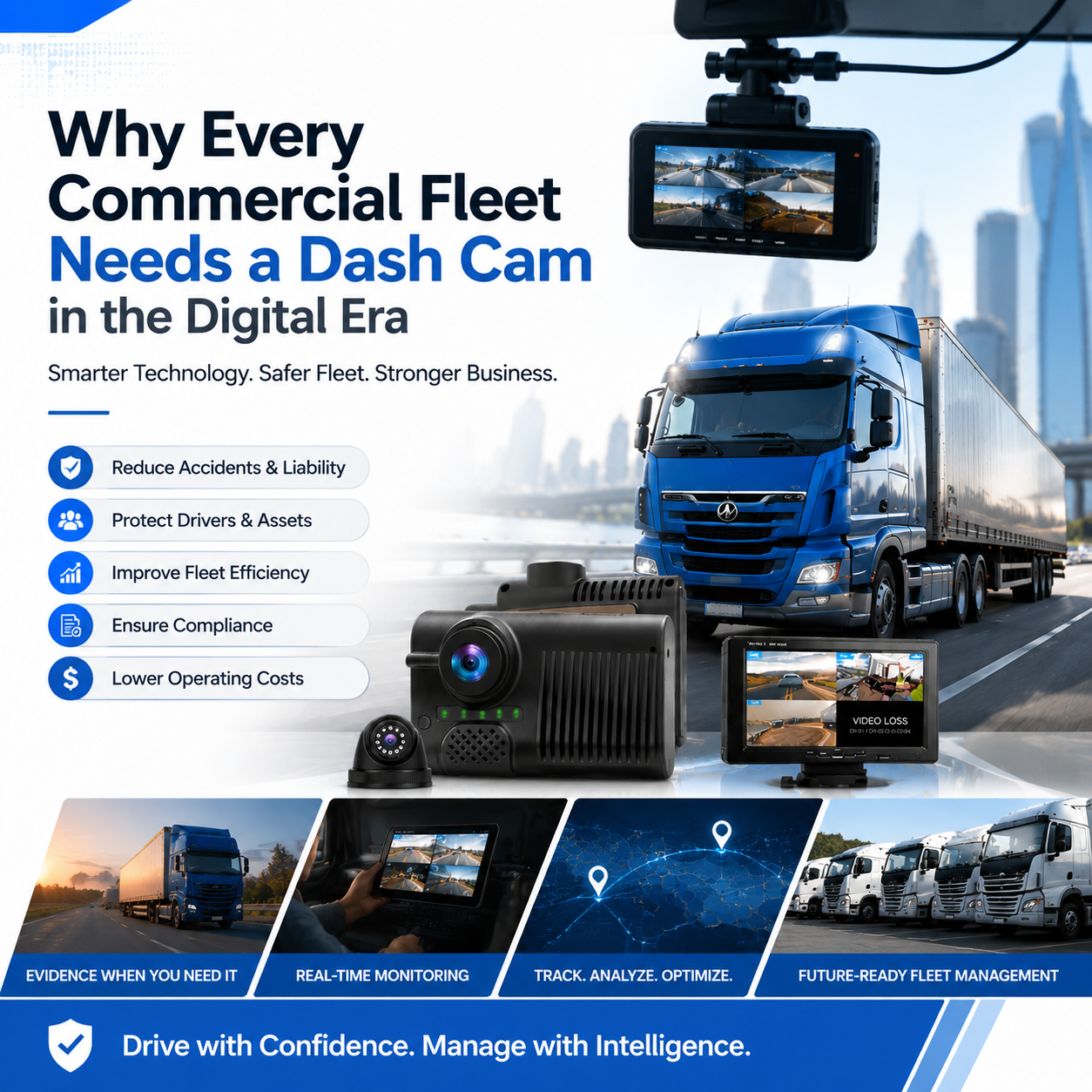
Why Every Commercial Fleet Needs a Dash Cam in the Digital Era
Digital transformation is changing every aspect of commercial transportation. While fleet management software, GPS tracking, and cloud platforms receive significant attention, one onboard device has become equally important: the Dash Cam. Once considered an optional accessory, the Dash Cam is now an essential tool for improving fleet safety, operational efficiency, regulatory compliance, and risk management.
The Role of a Dash Cam in Modern Fleet Operations
A professional Dash Cam continuously records road conditions and driving activities, providing reliable evidence whenever incidents occur. Today's intelligent Dash Cam solutions integrate with AI analytics, GPS tracking, cloud storage, and fleet management platforms, allowing businesses to monitor operations in real time.
Protecting Drivers and Businesses
A high-quality Dash Cam records objective accident evidence, protects drivers against false claims, accelerates insurance investigations, reduces litigation costs, and improves accountability. Accurate footage from a Dash Cam can shorten claim processing time and minimize unnecessary expenses.
Improving Driver Performance
Modern Dash Cam systems can identify harsh braking, rapid acceleration, distraction, speeding, unsafe following distance, and fatigue-related behavior. Fleet managers use these insights for targeted coaching and safer operating standards.
Supporting Compliance and Governance
A connected Dash Cam stores encrypted video files in the cloud, making it easier to meet compliance requirements, respond to audits, investigate incidents, and maintain transparent records.
Creating a Connected Fleet Ecosystem
A Vehicle Camera complements the road-facing recorder by adding cabin, side, rear, and cargo visibility. An integrated Vehicle Camera network gives managers a fuller understanding of each event. AI-enabled Vehicle Camera systems can also detect unsafe behavior in real time. When a Vehicle Camera is linked with telematics, location and video data can be reviewed together. A cloud-connected Vehicle Camera improves remote access, while a multi-channel Vehicle Camera supports buses, trucks, and specialized vehicles. Each Vehicle Camera becomes a data source for fleet analytics, and a properly configured Vehicle Camera platform strengthens overall risk management.
Future Outlook
As artificial intelligence and connected vehicle technology evolve, dash cameras will play a greater role in predictive safety, automated incident detection, and intelligent fleet management.