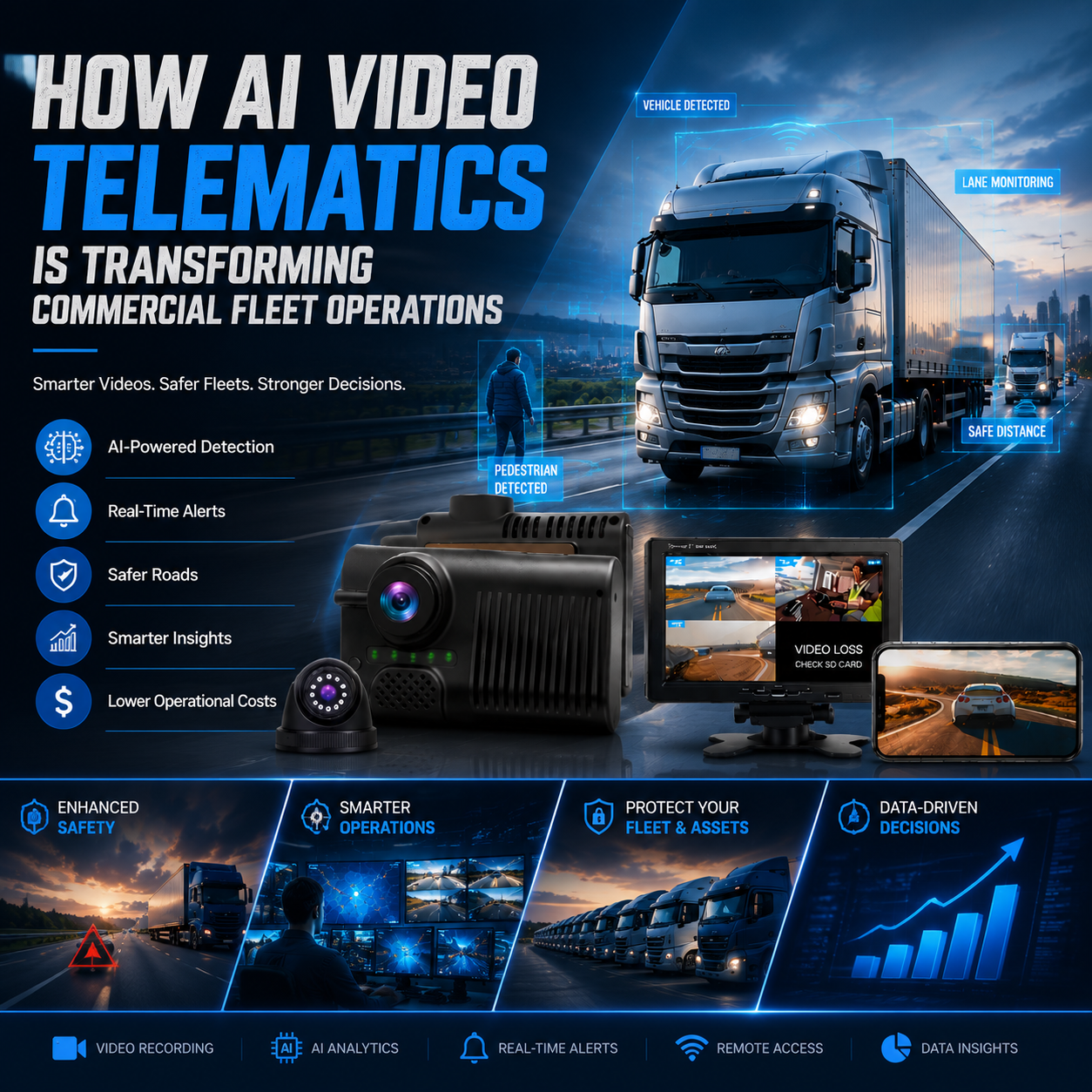
How AI Video Telematics Is Transforming Commercial Fleet Operations
The commercial transportation industry is experiencing a major technological shift as artificial intelligence, cloud computing, and connected vehicle technologies reshape fleet management. At the center of this transformation is Video Telematics, a solution that combines Vehicle Camera, Dash Cam, GPS tracking, and AI analytics into a single intelligent platform.
What Is Video Telematics?
Video Telematics integrates onboard cameras with vehicle data to provide real-time visibility into fleet operations. Instead of reviewing footage only after an accident, managers receive instant alerts, live video, and AI-generated insights that help prevent incidents before they occur.
Real-Time Risk Detection
An AI-enabled Vehicle Camera can identify distraction, fatigue, tailgating, speeding, harsh braking, lane departure, and collision risk. Each Vehicle Camera records the event and sends the relevant clip to the cloud. A multi-channel Vehicle Camera can cover the road, cabin, sides, rear, and cargo area. This broader Vehicle Camera visibility gives managers better context during incident review. A connected Vehicle Camera also supports live monitoring, while an edge-AI Vehicle Camera can issue alerts without waiting for cloud processing. When integrated with GPS, the Vehicle Camera links footage to time and location data. A reliable Vehicle Camera therefore becomes both a safety device and an operational data source.
Improving Operational Efficiency
A professional Dash Cam supports route analysis, dispatch visibility, and rapid incident response. Fleet managers use Dash Cam recordings to verify delivery conditions and investigate customer complaints. A cloud-based Dash Cam makes critical clips easier to retrieve, while an AI-powered Dash Cam flags risky driving events automatically. When paired with telematics, the Dash Cam helps reduce idling, improve vehicle utilization, and strengthen driver coaching. A properly deployed Dash Cam also contributes to lower insurance and legal costs.
Lowering Insurance and Maintenance Costs
Video evidence reduces fraudulent claims and accelerates investigations. Telematics data also supports predictive maintenance, helping fleets minimize unplanned downtime and repair costs.
Building a Data-Driven Fleet
Managers can evaluate driver performance, vehicle health, route efficiency, safety trends, fuel economy, utilization, and compliance records. These insights support continuous improvement and strategic planning.
The Future of Intelligent Transportation
Future platforms will use machine learning, predictive analytics, edge computing, and cloud automation to turn every trip into actionable intelligence.