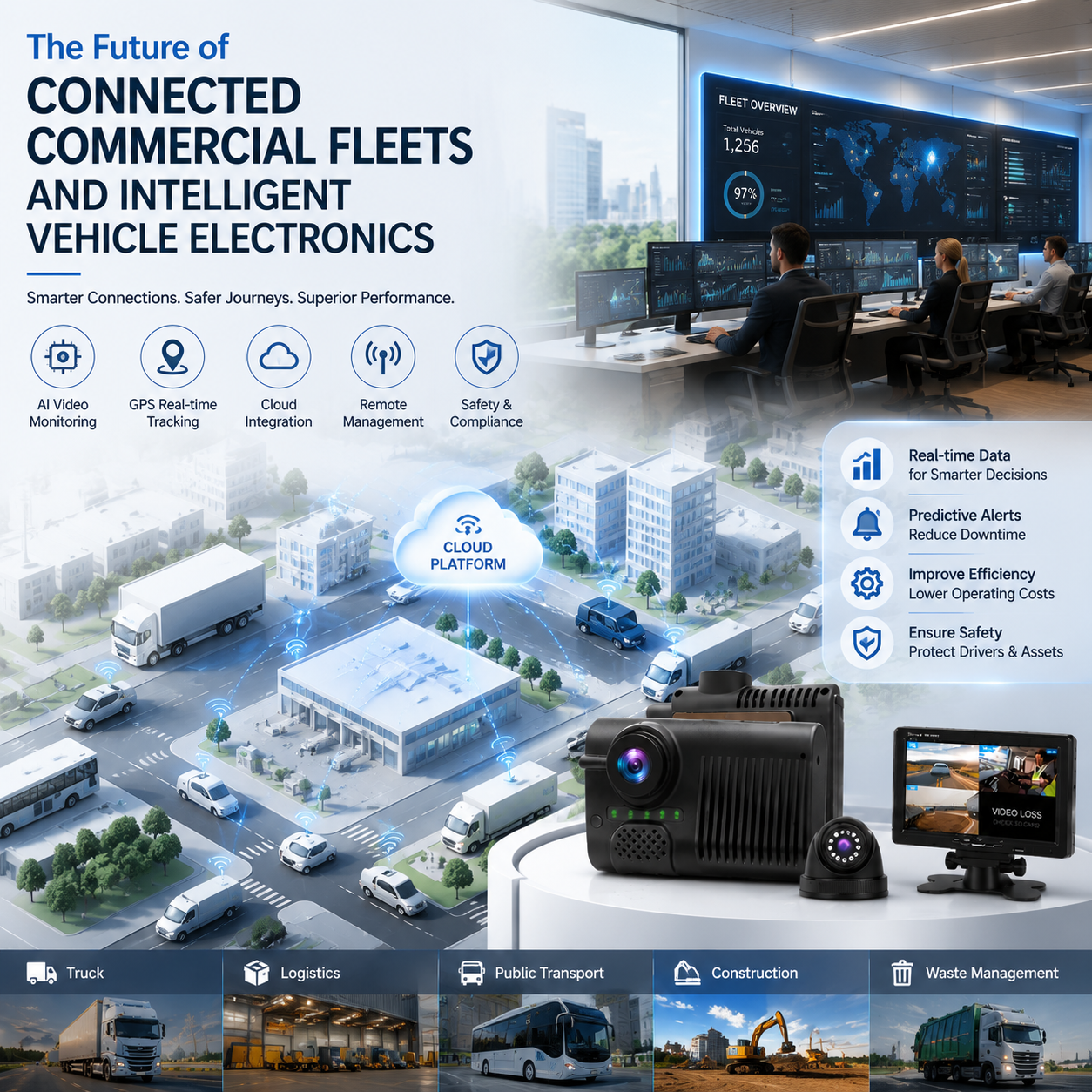
The Future of Connected Commercial Fleets: Building Smarter Transportation with Intelligent Vehicle Electronics
The commercial transportation industry is moving toward a future where every vehicle is connected, every trip generates actionable data, and every operational decision is supported by artificial intelligence. Intelligent vehicle electronics are becoming the foundation of modern fleet management.
Building a Fully Connected Fleet
A connected fleet links vehicles, drivers, managers, and operational data through cloud platforms. Every Vehicle Camera captures road and operational conditions, while a Dash Cam records critical driving events. Combined with GPS and AI analytics, these devices provide complete visibility into daily operations.
Intelligent Safety Management
An AI-powered Vehicle Camera can detect fatigue, distraction, lane departure, speeding, harsh braking, and forward-collision risk. A cabin-facing Vehicle Camera supports driver coaching, while a side-facing Vehicle Camera reduces blind spots. A rear Vehicle Camera improves reversing safety, and a cargo-area Vehicle Camera supports asset protection. A cloud-connected Vehicle Camera lets managers review events remotely. Each Vehicle Camera can also feed data into a centralized analytics platform. As edge AI improves, the Vehicle Camera will deliver faster warnings and more accurate risk detection. This makes the Vehicle Camera a core element of proactive fleet safety.
Data-Driven Operational Excellence
A professional Dash Cam provides objective evidence for accident investigation and insurance claims. A connected Dash Cam links video with location, speed, and event data. Fleet managers can use Dash Cam footage for coaching, dispute resolution, and service verification. An AI-enabled Dash Cam can automatically identify risky events, while a cloud-based Dash Cam makes footage available across departments. As regulations and customer expectations rise, the Dash Cam will remain an essential part of transparent fleet governance.
Cloud-Based Fleet Intelligence
Integrated platforms combine video, GPS, telematics, maintenance, driver behavior, and compliance data in one environment. This centralized approach improves collaboration between dispatchers, safety managers, maintenance teams, and executives.
Preparing for the Next Generation
Emerging innovations include AI-assisted automation, predictive maintenance, autonomous safety systems, edge video processing, advanced vehicle connectivity, intelligent transportation infrastructure, and cloud-native fleet management.
Conclusion
Commercial fleet digital transformation is today's business reality. Organizations investing in connected electronics can improve safety, reduce cost, strengthen compliance, and build more resilient transportation operations.