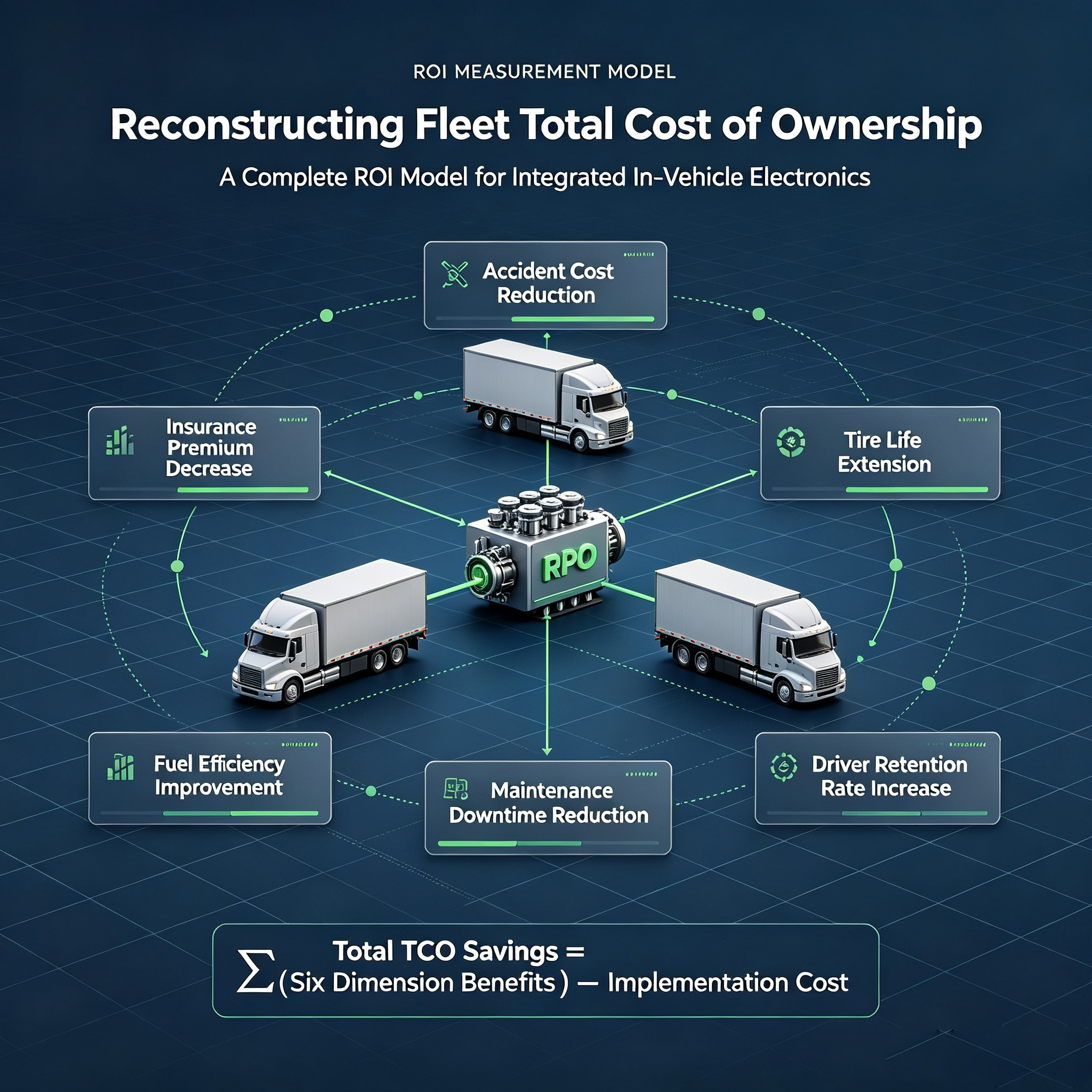
Predictive Maintenance and Fleet Analytics: Building the Next Layer of Fleet TCO Savings
After safety and fuel efficiency, maintenance is often the next major opportunity for reducing Fleet TCO. Traditional service schedules rely on fixed mileage or time intervals, but integrated diagnostics and analytics allow operators to maintain vehicles according to actual condition, usage, and risk.
This approach improves Fleet ROI by reducing breakdowns, extending component life, and preventing unnecessary workshop visits.
1. Replace Reactive Maintenance With Condition-Based Decisions
Reactive maintenance creates expensive downtime, emergency towing, missed deliveries, and secondary component damage. Modern In-Vehicle Electronics continuously collect data from the engine, battery, braking system, transmission, tires, and other critical components.
When this information is transmitted through Vehicle Telematics, maintenance teams can identify abnormal trends before failure occurs.
2. Create a Complete Maintenance Cost Baseline
A robust Fleet Cost Management model should include more than parts and labor. It should also measure:
These hidden costs often make unscheduled failures far more expensive than the repair invoice alone.
3. Use Fleet Analytics to Identify Failure Patterns
Fleet Analytics can compare fault codes, mileage, operating hours, routes, loads, and driver behavior across the entire fleet. This helps managers recognize patterns that would be difficult to see in individual maintenance records.
For example, repeated brake wear on a particular route may indicate terrain, loading, or driving behavior problems. A recurring battery issue may be linked to idle time, accessory use, or charging performance.
4. Improve Asset Utilization Through Connected Data
A Connected Fleet gives maintenance, dispatch, and operations teams access to the same vehicle status information. This prevents scheduling a vehicle for work when it is approaching a critical service threshold.
A reliable Fleet Tracking System can also show mileage accumulation, engine hours, utilization, and location, allowing maintenance appointments to be planned with minimal disruption.
5. Integrate Video and Diagnostic Context
Video Telematics adds operational context to mechanical data. Harsh braking, rough road conditions, overloading, and aggressive acceleration can accelerate component wear. Linking video events with diagnostic trends helps teams understand why failures occur rather than simply recording them.
This connection supports better driver coaching and more accurate maintenance forecasting.
6. Calculate the Maintenance ROI
The annual benefit can be modeled as:
Maintenance Benefit = Avoided Breakdowns + Reduced Repair Severity + Lower Downtime Cost + Extended Component Life + Improved Asset Utilization - Technology and Program Cost
For accurate Fleet ROI, the calculation should compare actual post-deployment results with the original baseline, not with estimates alone.
7. Optimize Vehicle Replacement Timing
Replacing vehicles too early wastes capital, while keeping them too long increases repair and downtime costs. Fleet Management platforms can combine age, mileage, maintenance history, fuel use, utilization, and residual value to determine the most economical replacement point.
This is a core part of Fleet Optimization because the goal is not simply to minimize maintenance expense; it is to minimize total lifecycle cost while maintaining service reliability.
8. Standardize Data Across Commercial Vehicles
Fleets often operate multiple brands and vehicle types. Integrated Commercial Vehicle Electronics can normalize data from different platforms and deliver consistent maintenance indicators.
Standardization improves benchmarking, simplifies reporting, and gives decision-makers a unified view of asset performance.
9. Build a Continuous Improvement Cycle
The strongest programs use monthly review cycles. Teams should monitor unscheduled repairs, mean time between failures, maintenance cost per mile, vehicle availability, repeat faults, and component life.
When diagnostic data, telematics, maintenance records, and operational outcomes are reviewed together, the fleet can continuously refine service intervals and replacement policies.
Conclusion
Predictive maintenance creates value by turning vehicle data into earlier, better decisions. When diagnostics, analytics, tracking, video, and maintenance workflows operate as one system, fleets can reduce downtime, control lifecycle costs, and improve asset reliability. This data-driven approach creates a durable foundation for long-term cost reduction and operational resilience.