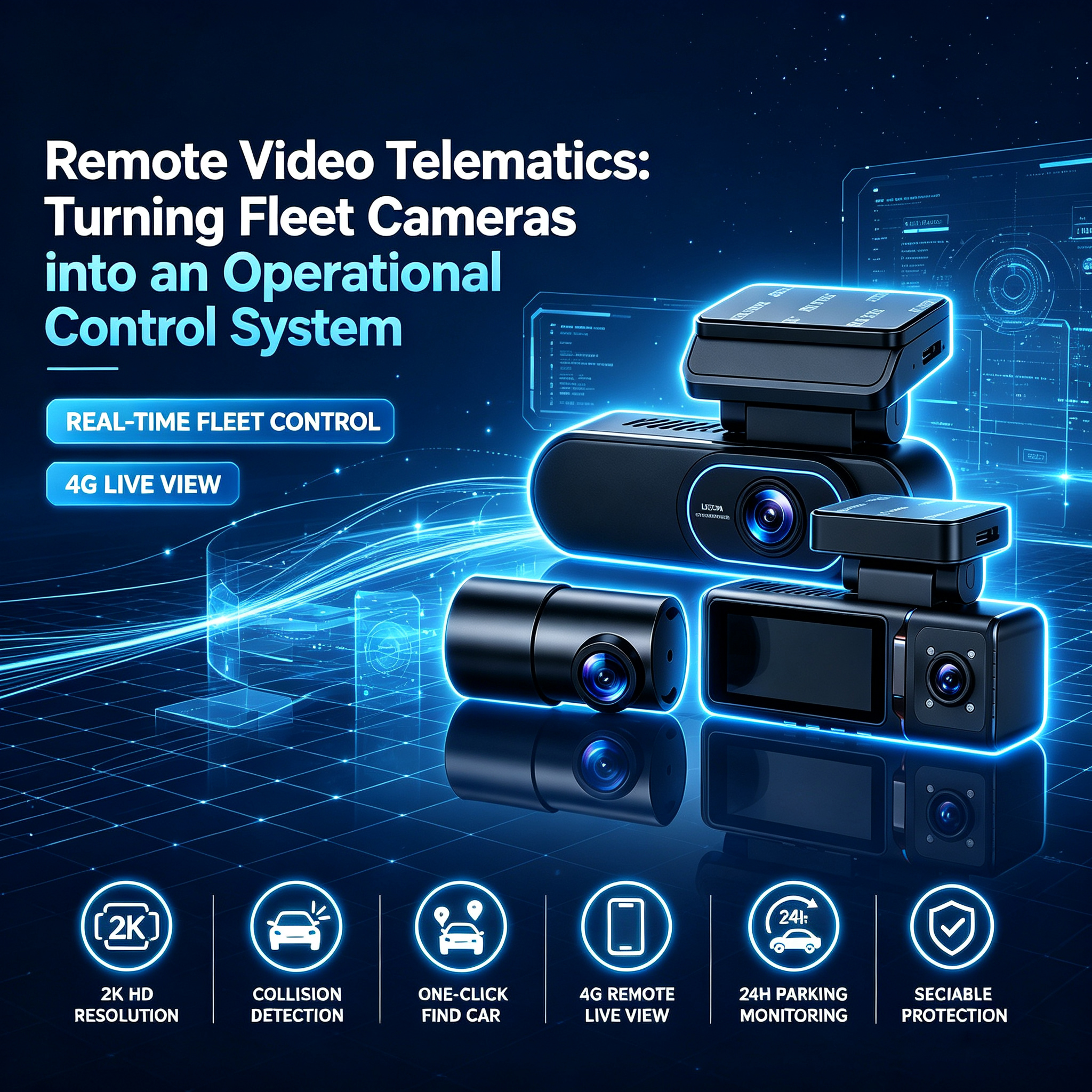
Remote Video Telematics: Turning Fleet Cameras into an Operational Control System
A modern fleet dash cam is most valuable when its footage is available at the right time, connected to the right event, and delivered to the right person. Remote video telematics transforms a camera from a local recording device into an operational control system for safety, compliance, and fleet visibility.
Why Remote Access Changes Fleet Management
With an AI dash camera system, critical clips can be classified and uploaded automatically after events such as hard braking, impact, distraction, or unsafe following. A commercial vehicle dash camera no longer needs to be physically removed or inspected before managers can understand what happened.
Through fleet video telematics, authorized users can review event footage alongside speed, location, route, and vehicle data. This helps dispatch, safety, claims, and operations teams work from one shared timeline.
Choosing the Right Camera Architecture
A dual channel dash cam is useful when fleets need both road-facing evidence and cabin context. A front and rear fleet camera extends coverage for reversing, rear-end impacts, loading areas, and vehicles operating in dense traffic.
Resolution should match operating conditions. A 2K fleet dash cam can support detailed review in complex scenes, while a 1080P fleet dash cam can reduce storage and data use for large-scale deployments. A GPS WiFi dash cam supports location-aware footage transfer and easier synchronization when vehicles reach trusted wireless networks.
AI Event Prioritization
Remote access alone can create information overload. AI is valuable because it filters large volumes of footage into prioritized events. A driver monitoring system DMS can identify fatigue, distraction, mobile phone use, smoking, and seatbelt violations. An ADAS dash camera can detect lane departure, forward-collision exposure, and unsafe following distance.
When combined with AI driver behavior monitoring, these signals can be ranked by severity, frequency, and context. Safety teams can then focus first on high-risk patterns rather than reviewing random clips.
Operational Use Cases Beyond Safety
Remote video can support several business functions. Dispatch teams can verify traffic disruptions. Customer-service teams can investigate delivery disputes. Maintenance managers can review road conditions associated with vehicle damage. Claims teams can preserve evidence immediately, while compliance teams can document procedures and event handling.
The same platform can also help identify inefficient routes, repeated harsh braking zones, risky loading sites, or depot-specific training needs.
Governance Is Essential
Remote visibility must be balanced with privacy and security. Fleets should use role-based permissions, encrypted transmission, controlled retention periods, audit logs, and clear driver communication. Live viewing should be limited to justified operational scenarios, while routine coaching should rely on event-based clips.
A Step-by-Step Deployment Model
Map operational problems before selecting hardware.
Define which events trigger upload or alerts.
Set access permissions for safety, claims, dispatch, and management.
Create response standards for urgent and non-urgent events.
Train drivers and supervisors on the purpose of the system.
Measure response time, event reduction, claims outcomes, and coaching quality.
Remote video telematics creates value when it improves decisions, not merely when it increases visibility. Fleets that combine intelligent event detection, disciplined governance, and timely coaching can convert video into a practical tool for safer and more efficient operations.