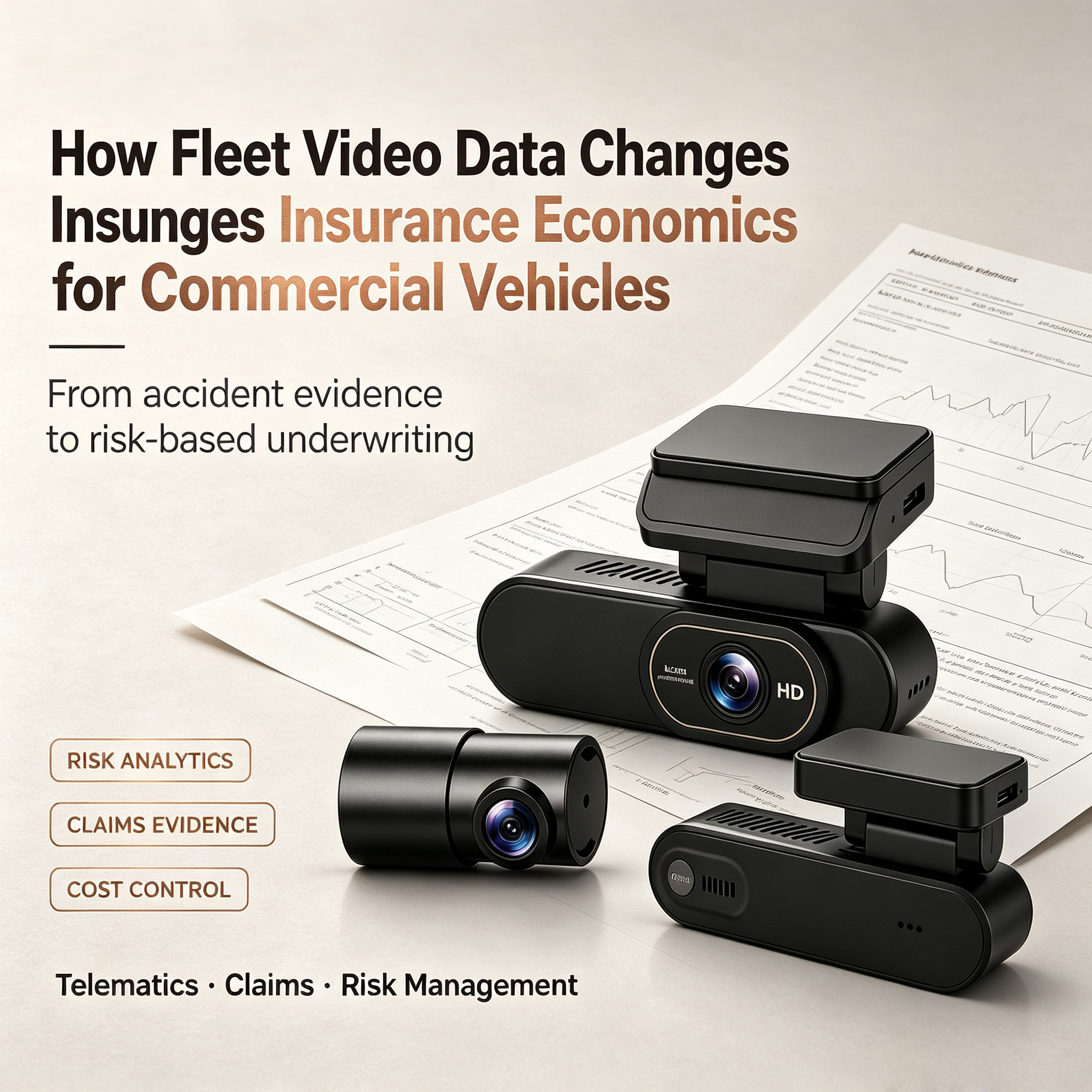
How Fleet Video Data Changes Insurance Economics for Commercial Vehicles
Insurance cost is not determined by camera ownership alone. The real value appears when a fleet dash cam becomes part of a disciplined risk-management process that connects video evidence, driver coaching, incident review, and operational data.
Reducing Uncertainty at the Moment of a Claim
An AI dash camera system can preserve the seconds before and after a critical event, helping claims teams understand speed, road position, traffic conditions, and driver response. For a business using a commercial vehicle dash camera, this evidence can shorten investigations and reduce disputes about fault.
When video is synchronized with location and vehicle data through fleet video telematics, claims handlers receive a clearer timeline. This can improve decision speed, reduce legal friction, and help prevent opportunistic or exaggerated claims.
Why Camera Coverage Influences Claim Quality
A dual channel dash cam documents both the roadway and the driver's immediate environment. In many cases, that combination can show whether the driver was attentive and whether an external road user created the hazard. A front and rear fleet camera adds evidence for rear impacts, unsafe overtaking, reversing incidents, and cargo-area disputes.
Resolution also affects evidentiary value. A 2K fleet dash cam may reveal smaller details in complex scenes, while a 1080P fleet dash cam can provide dependable documentation with lower bandwidth and storage requirements. A GPS WiFi dash cam allows location-linked clips to be transferred quickly for internal review or insurer submission.
From Historical Losses to Leading Indicators
Traditional insurance pricing often relies heavily on past claims. Connected video introduces leading indicators that show how risk is changing before a severe loss occurs. A driver monitoring system DMS can identify distraction and fatigue events, while an ADAS dash camera can flag close following, lane departure, and forward-collision exposure.
With AI driver behavior monitoring, fleets can compare event frequency by depot, route, shift, vehicle type, or driver group. This enables targeted interventions instead of generic safety campaigns.
The Business Case Beyond Premium Reduction
Lower premiums may be possible in some insurance programs, but they should not be the only objective. The larger economic impact can include lower claim severity, fewer replacement vehicles, less unplanned downtime, reduced legal expense, improved customer service, and better driver retention.
A fleet should therefore calculate total cost of risk, not simply insurance premium. Useful measures include collision frequency, average claim cost, preventable-incident rate, days of vehicle downtime, litigation expense, and coaching completion rate.
Building an Insurer-Ready Safety Program
Document camera coverage, alert settings, and retention policies.
Maintain a consistent event-review and coaching workflow.
Track changes in risky behaviors over time.
Separate preventable and non-preventable incidents.
Share summarized risk improvements with brokers and insurers.
Protect privacy through role-based access and limited retention.
Video does not eliminate risk, but it changes the economics of uncertainty. Fleets that combine reliable evidence with measurable behavior improvement can create a stronger risk profile and a more defensible insurance strategy.