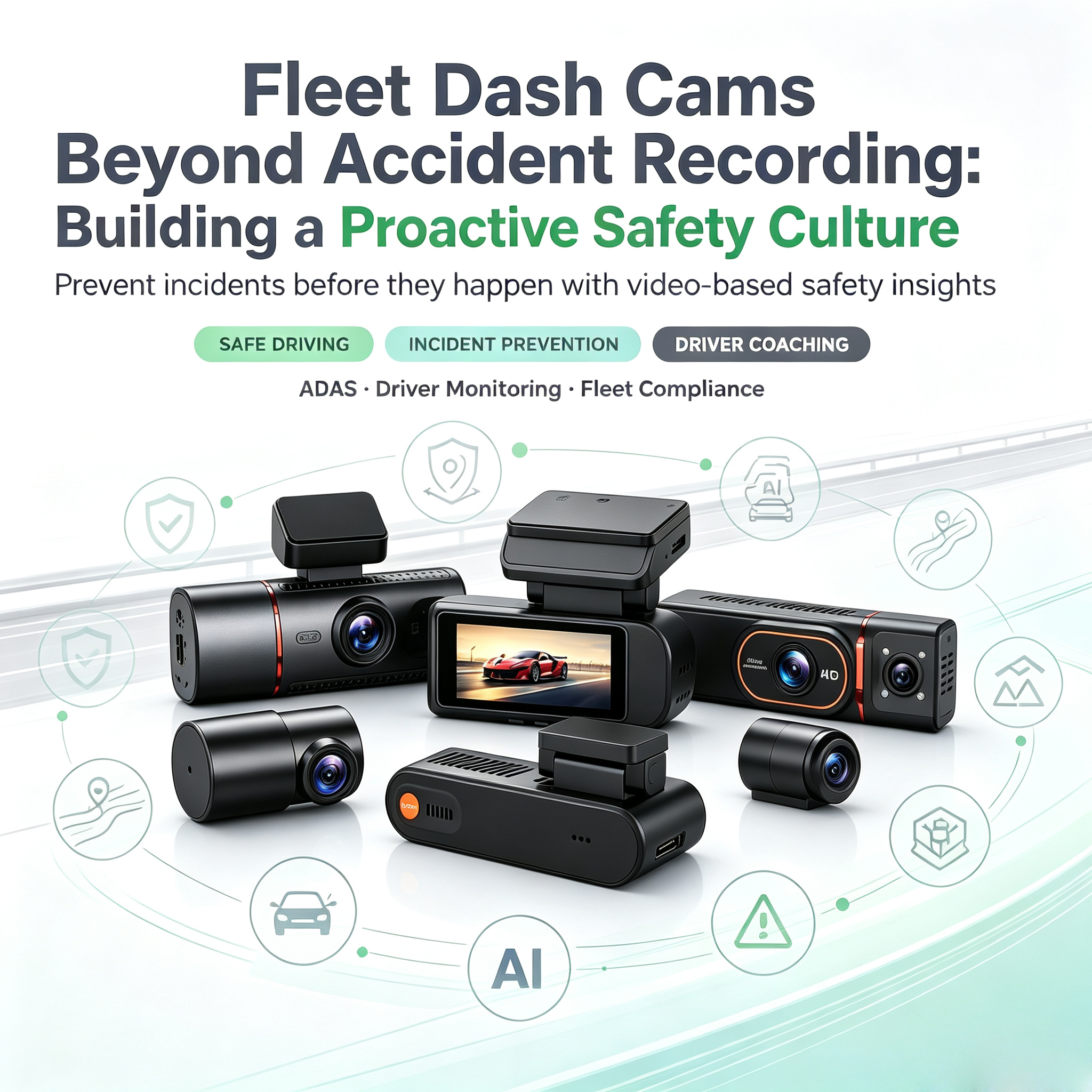
Fleet Dash Cams Beyond Accident Recording: Building a Proactive Safety Culture
For many organizations, the first reason to install a fleet dash cam is simple: obtain evidence after a collision. That benefit still matters, but it represents only a fraction of what modern connected camera platforms can deliver. Today, an AI dash camera system can help fleets prevent risk, coach drivers, validate incidents, and create a stronger safety culture across daily operations.
From Evidence Collection to Everyday Risk Reduction
A traditional commercial vehicle dash camera records what happened. A connected platform adds context by combining video with speed, location, braking, acceleration, route, and driver-event data. This creates a fleet video telematics environment in which managers can distinguish isolated mistakes from repeated risk patterns.
Instead of reviewing hours of footage, supervisors can focus on exception-based events such as distraction, harsh cornering, close following, fatigue, or lane departure. A dual channel dash cam provides simultaneous road-facing and cabin-facing views, while a front and rear fleet camera improves visibility during reversing, merging, and rear-impact disputes.
Image Quality and Connectivity Matter
Clear evidence depends on the right hardware. A 2K fleet dash cam can capture fine details such as license plates and road signs, while a 1080P fleet dash cam offers a practical balance of clarity, bandwidth, and storage cost. A GPS WiFi dash cam adds location and wireless data transfer so authorized teams can retrieve critical clips without waiting for a vehicle to return to base.
Driver Coaching Without a Punitive Culture
Technology creates the greatest value when it supports coaching rather than surveillance. A driver monitoring system DMS can detect distraction, drowsiness, phone use, smoking, or missing seatbelts. An ADAS dash camera can warn about forward-collision risk, unsafe following distance, and lane departure. Combined with AI driver behavior monitoring, fleets can deliver timely, specific, and fair feedback.
Managers should explain what is monitored, how data is used, how long footage is retained, and how drivers can challenge an event. Transparency increases trust and helps drivers understand that the objective is safer work, not constant punishment.
Insurance Economics and Claims Efficiency
Video reduces uncertainty. When a claim occurs, synchronized footage and telematics can clarify fault, accelerate investigation, and reduce fraudulent or exaggerated claims. Over time, consistent safety data may also help a fleet demonstrate stronger controls to brokers and insurers. The economic value comes from fewer severe incidents, reduced downtime, lower legal expense, faster claims handling, and improved asset utilization.
A Practical Implementation Framework
Define the most important risks by vehicle type, route, and driver task.
Select camera coverage and connectivity based on those risks.
Create transparent privacy, access, and retention policies.
Coach drivers with short, event-based feedback.
Measure leading indicators such as distraction frequency and following distance.
Review insurance, maintenance, and incident data together.
When deployed with clear policies and good coaching, fleet cameras become part of a broader operating system for safety. They help organizations move from reactive investigation to preventive risk management.