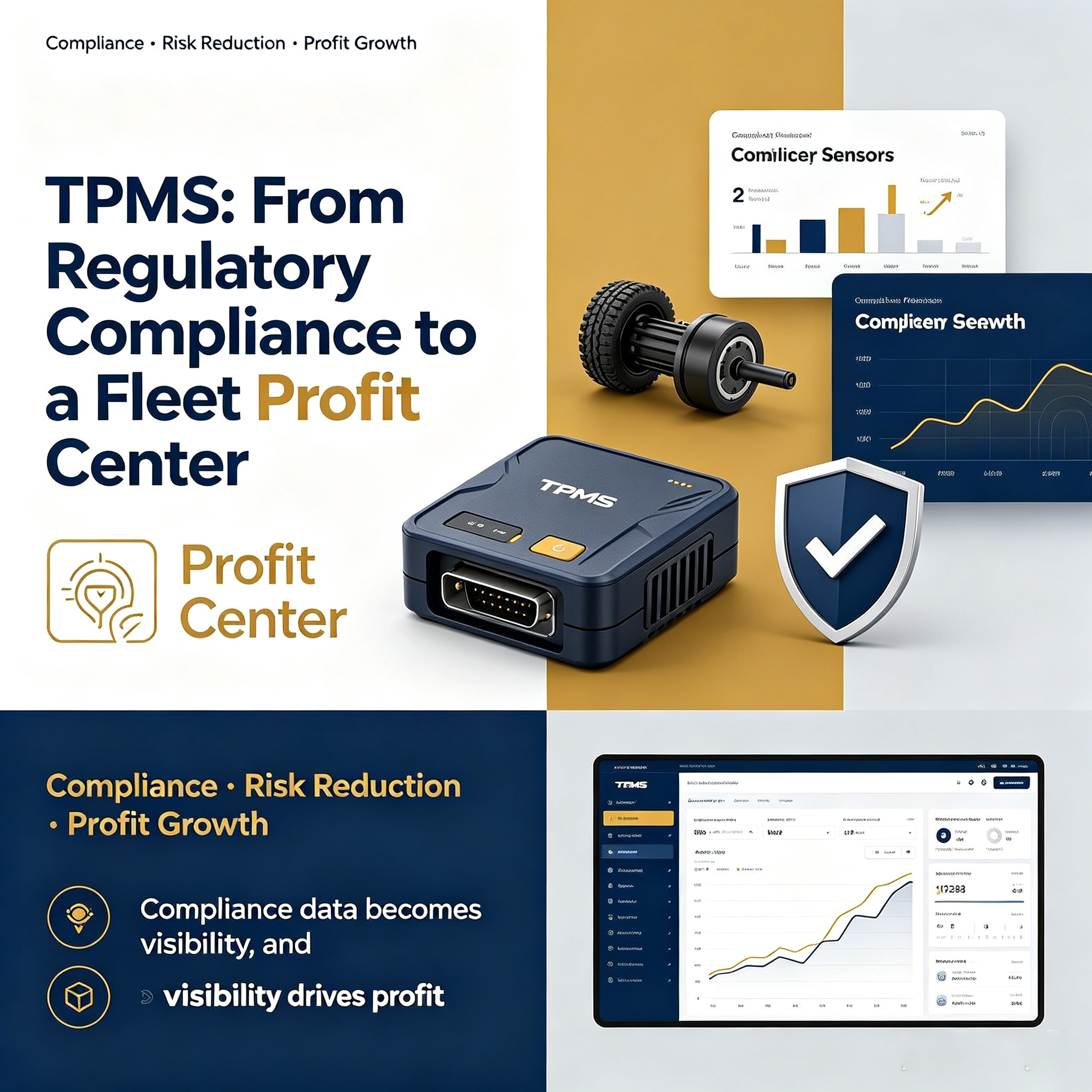
TPMS: From Regulatory Compliance to a Fleet Profit Center
For many fleet operators, TPMS (Tire Pressure Monitoring System) has traditionally been viewed as a technology implemented mainly to satisfy Regulatory Compliance requirements. In modern transportation, however, TPMS has become a strategic management tool that can lower operating costs, improve road safety, extend tire life, and increase fleet profitability.
Compliance Is Only the Starting Point
Governments continue to strengthen safety rules for every Commercial Vehicle. Proper tire inflation affects braking, stability, load handling, and accident prevention. Compliance helps fleets avoid penalties, but the greater opportunity comes from using tire data to improve performance.
Reducing Fuel Consumption
Underinflated tires increase Rolling Resistance, forcing the engine to consume more energy. Continuous pressure monitoring helps maintenance teams correct deviations early and reduce Fuel Consumption across the fleet.
Extending Tire Life
Incorrect pressure accelerates Tire Wear, creates uneven tread patterns, and increases replacement frequency. Maintaining correct inflation improves tire utilization and reduces unnecessary purchasing costs.
Predictive Maintenance Creates Value
Traditional inspections often detect problems after damage has begun. TPMS supports Predictive Maintenance by identifying slow leaks, abnormal temperature changes, and pressure trends before they cause roadside failures.
Improving Fleet Operation
Real-time dashboards improve Fleet Operation by helping managers prioritize maintenance, reduce emergency repairs, and keep more vehicles available for revenue-generating work.
Better Cost Control
Every avoided failure strengthens Cost Control. Savings come from reduced roadside assistance, lower tire replacement frequency, improved fuel efficiency, less downtime, and longer asset life.
Sensor Technology and Intelligent Transportation
Modern Sensor Technology monitors pressure, temperature, leakage trends, battery condition, and system status. Cloud platforms transform this data into actionable decisions.
Conclusion
TPMS is no longer only a compliance expense. By reducing fuel consumption, limiting tire wear, lowering rolling resistance, enabling predictive maintenance, improving fleet operation, and supporting cost control, it can become a genuine fleet profit center.