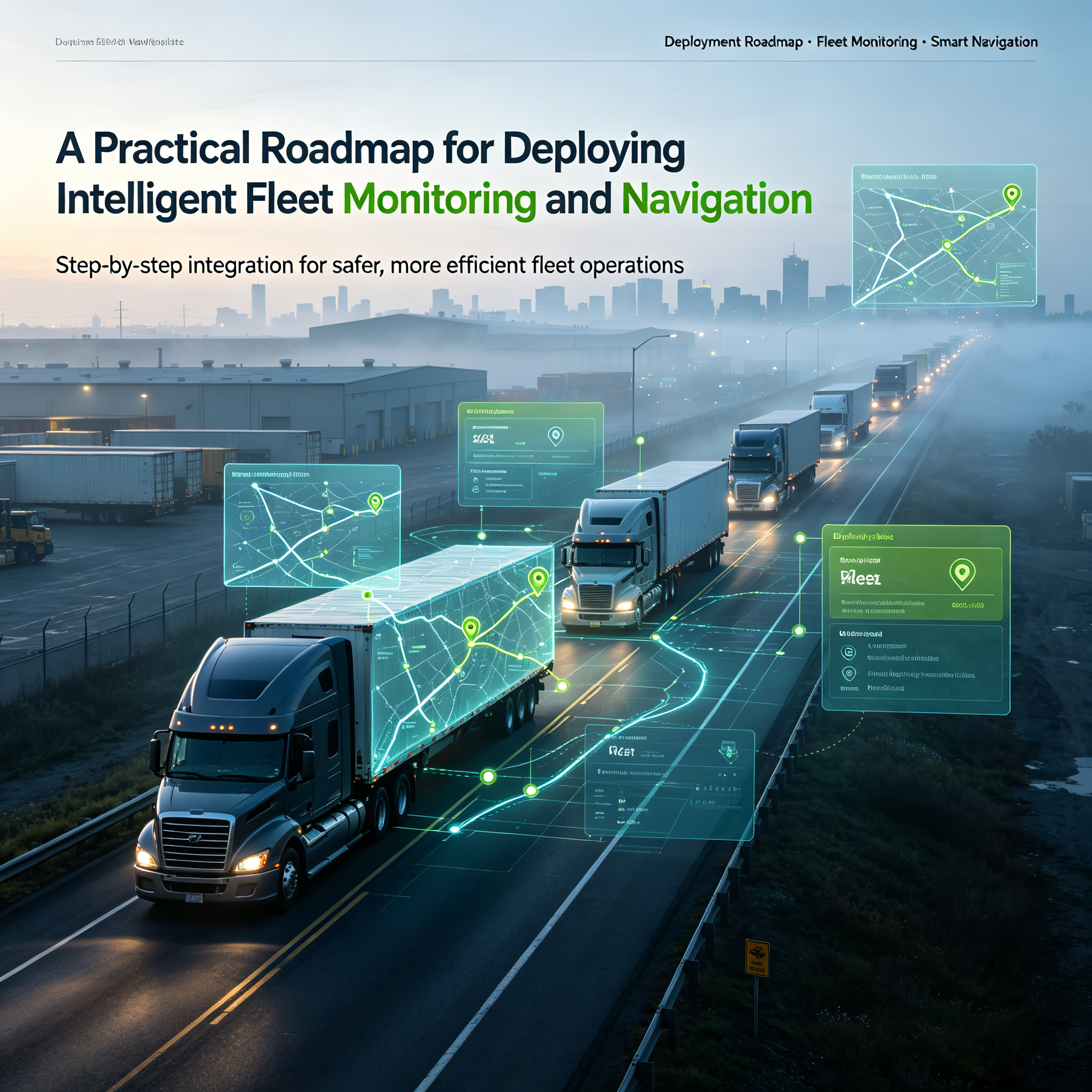
A Practical Roadmap for Deploying Intelligent Fleet Monitoring and Navigation
Investing in connected fleet technology is not simply a hardware purchase. It is an operational transformation that affects vehicles, drivers, dispatchers, maintenance teams, customer service, and management. A structured deployment plan helps organizations capture measurable value while avoiding fragmented systems and unused data.
Define the Business Goals
Before selecting devices or software, managers should decide which outcomes matter most: lower fuel cost, improved delivery accuracy, safer driving, reduced downtime, stronger security, or better customer communication. A Wireless Fleet Management System should be configured around those priorities. When a Wireless Fleet Management System is tied to clear performance indicators, technology decisions become easier to evaluate.
GPS Fleet Tracking is often the first capability deployed because location visibility delivers immediate operational value. However, GPS Fleet Tracking should support defined workflows such as dispatch, geofencing, route review, and proof of arrival rather than functioning as a map alone.
Select the Right Operational Capabilities
Smart Fleet Monitoring should capture the information needed for daily action, including ignition status, mileage, idle time, engine alerts, and fuel-related events. A well-designed Smart Fleet Monitoring process reduces alert overload by prioritizing exceptions that require attention.
A dependable Android Car Navigation System gives drivers consistent route guidance and can support job information, messaging, and delivery instructions. The selected Android Car Navigation System should be easy to use, stable in commercial environments, and compatible with the fleet's operational software.
Vehicle Telematics Solutions should match vehicle types, data requirements, and integration needs. Scalable Vehicle Telematics Solutions allow companies to begin with core tracking and later add diagnostics, cameras, sensors, or advanced analytics.
Integrate Real-Time Operations
Real-Time Vehicle Tracking becomes more useful when it is connected with dispatch, customer service, and maintenance processes. Through Real-Time Vehicle Tracking, teams can react to delays, adjust assignments, and provide more reliable arrival estimates.
The central Fleet Management Platform should provide role-based access, clear dashboards, configurable alerts, and exportable reports. A flexible Fleet Management Platform also needs reliable APIs or integration tools so fleet data can connect with transport, ERP, CRM, or maintenance systems.
Commercial Vehicle GPS Tracking must account for the operating conditions of trucks, buses, vans, and specialized equipment. Durable hardware, stable connectivity, and accurate installation are essential for dependable Commercial Vehicle GPS Tracking.
Build Driver Acceptance and Safety
Fleet Driver Behavior Monitoring should be introduced with transparent policies and a focus on coaching. When drivers understand how Fleet Driver Behavior Monitoring improves safety and protects responsible employees, adoption is more likely to succeed.
A unified Connected Vehicle Management System should create one consistent source of operational truth. The Connected Vehicle Management System can then support automated reports, predictive maintenance, route benchmarking, and long-term performance improvement.
Measure and Scale
Organizations should compare results before and after deployment using indicators such as fuel consumption, idle time, accident frequency, maintenance downtime, route deviation, on-time service, and vehicle utilization. Successful pilots can then be expanded by vehicle type, region, or business unit.
The strongest fleet technology programs combine reliable devices, useful software, clear operating procedures, driver engagement, and continuous measurement. This approach turns connected monitoring and intelligent navigation into a sustainable digital backbone rather than an isolated technology project.