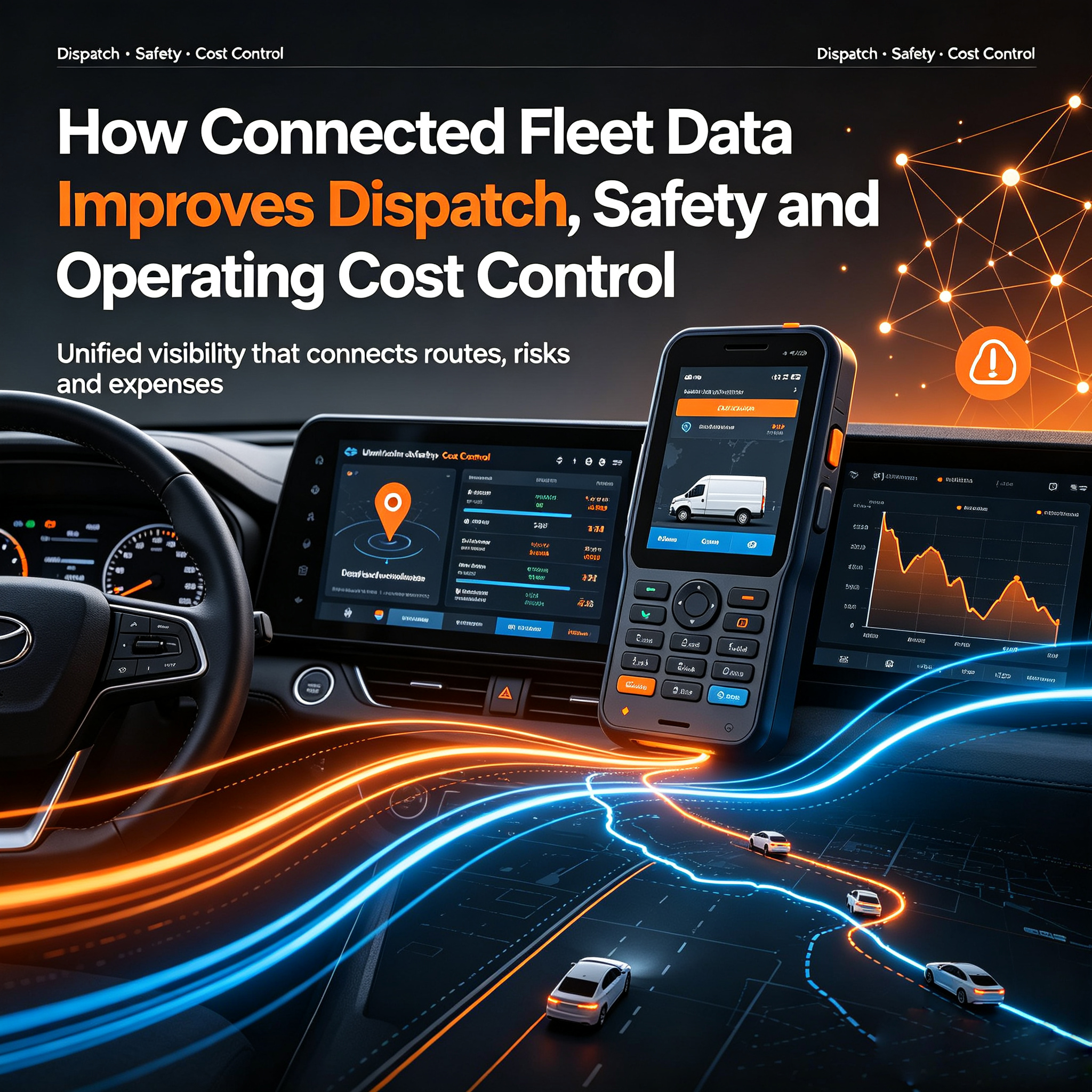
How Connected Fleet Data Improves Dispatch, Safety and Operating Cost Control
Modern fleet performance depends on more than knowing where a vehicle is located. The real competitive advantage comes from connecting location, diagnostics, navigation, driver activity, maintenance history, and delivery status in a single decision-making environment.
Creating a Unified Data Layer
A Wireless Fleet Management System gives managers a continuous flow of information from vehicles in the field. When a Wireless Fleet Management System is connected to dispatch, maintenance, and customer service workflows, the same data can support multiple departments instead of remaining isolated.
GPS Fleet Tracking provides the location foundation for this data layer. Accurate GPS Fleet Tracking helps planners identify delays, compare planned routes with actual movement, and improve estimated arrival times.
Turning Monitoring into Action
Smart Fleet Monitoring adds context to location data by showing engine status, idle time, fuel consumption, mileage, and exception events. Effective Smart Fleet Monitoring allows teams to focus on vehicles that need attention rather than manually checking the entire fleet.
An integrated Android Car Navigation System can send approved routes directly to drivers and update directions when traffic or delivery priorities change. A commercial-grade Android Car Navigation System also reduces communication errors between dispatchers and drivers.
Advanced Vehicle Telematics Solutions make it possible to compare driving patterns, vehicle condition, and route performance. By using Vehicle Telematics Solutions, companies can establish data-based maintenance schedules and reduce unplanned downtime.
Improving Daily Dispatch
Real-Time Vehicle Tracking enables dispatchers to assign the nearest available vehicle, respond to customer changes, and verify job completion. With Real-Time Vehicle Tracking, route decisions can be based on actual conditions instead of assumptions.
A cloud-based Fleet Management Platform centralizes alerts, maps, reports, driver records, and maintenance tasks. The right Fleet Management Platform also makes performance data easier to share with operations leaders and regional managers.
For trucks, buses, vans, and service vehicles, Commercial Vehicle GPS Tracking provides essential control over high-value mobile assets. Commercial Vehicle GPS Tracking can also support geofencing, unauthorized-use alerts, and proof-of-service records.
Supporting Safer Driving
Fleet Driver Behavior Monitoring identifies patterns such as harsh acceleration, speeding, cornering, and prolonged idling. Used constructively, Fleet Driver Behavior Monitoring helps managers design targeted coaching instead of relying on general safety reminders.
A complete Connected Vehicle Management System brings these functions together and creates a consistent operating process. As the Connected Vehicle Management System matures, businesses can apply predictive analytics to maintenance, route planning, and workforce allocation.
Operational Benefits
Connected fleet data supports faster dispatch, lower fuel waste, improved asset utilization, stronger driver safety, and more accurate customer communication. The most successful implementations begin with clear business goals, consistent data standards, and measurable performance indicators.