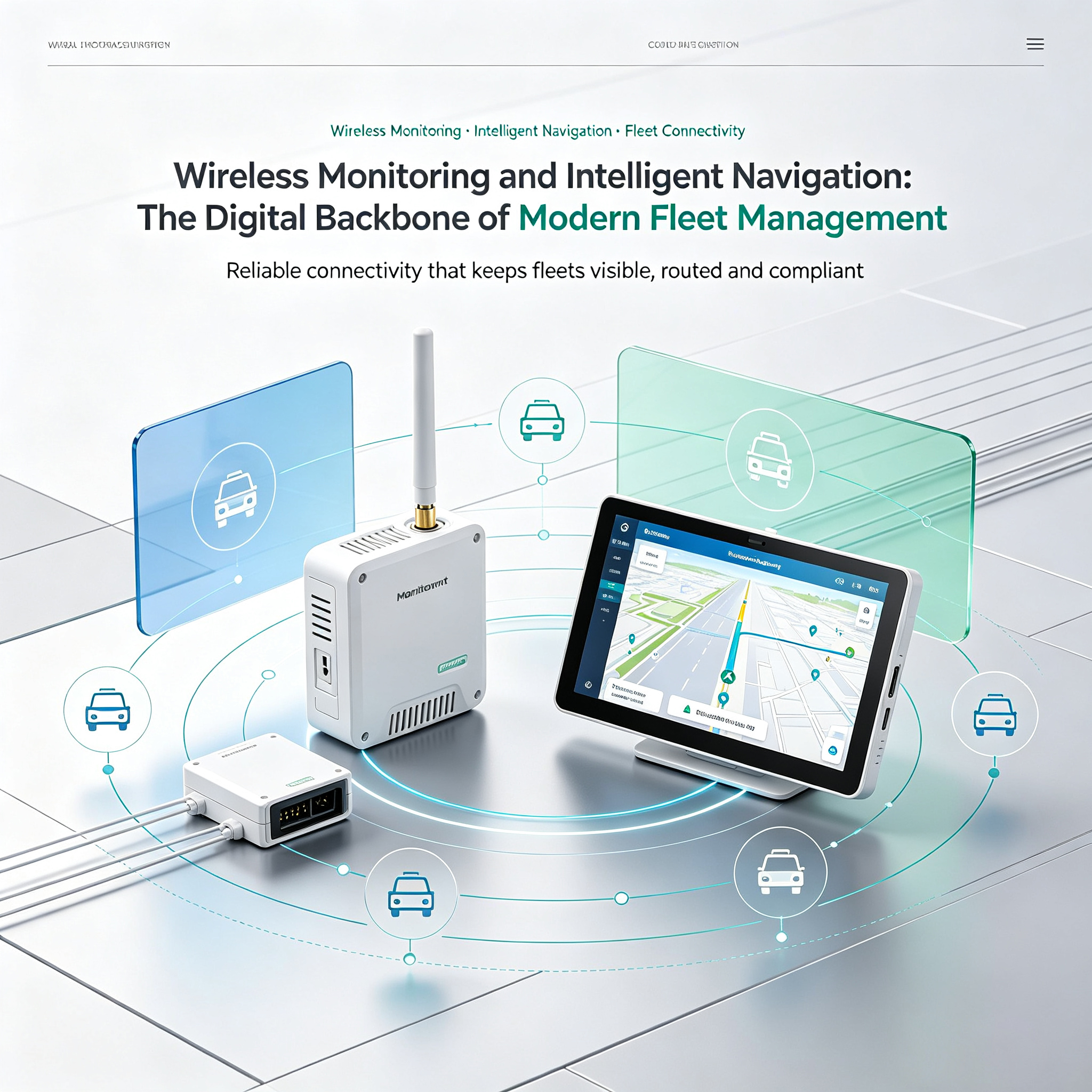
Wireless Monitoring and Intelligent Navigation: The Digital Backbone of Modern Fleet Management
As transportation and logistics continue to evolve, businesses are under increasing pressure to improve operational efficiency, reduce costs, and enhance driver safety. Traditional fleet management methods are no longer sufficient to meet the demands of today's connected economy. Modern enterprises require intelligent technologies capable of delivering real-time visibility, predictive insights, and automated decision-making.
Building a Connected Operating Foundation
A Wireless Fleet Management System has become the cornerstone of digital fleet transformation. By integrating wireless communication, cloud computing, GPS positioning, and IoT technologies, fleet operators gain complete visibility into vehicle status, driver performance, and operational efficiency. Companies implementing a Wireless Fleet Management System can significantly reduce downtime while improving dispatch accuracy.
One of the most essential technologies supporting digital transformation is GPS Fleet Tracking. Through continuous GPS Fleet Tracking, fleet managers can monitor vehicle locations, optimize routes, prevent unauthorized vehicle usage, and improve customer service with accurate delivery estimates.
From Visibility to Intelligence
Beyond simple positioning, Smart Fleet Monitoring introduces intelligent analytics into everyday operations. A reliable Smart Fleet Monitoring platform continuously collects vehicle health information, fuel consumption, engine diagnostics, and maintenance alerts, allowing businesses to proactively prevent costly breakdowns.
Navigation technology has also evolved dramatically. A professional Android Car Navigation System offers commercial drivers optimized routing, offline mapping capabilities, and dynamic traffic updates. When integrated into fleet operations, the Android Car Navigation System helps minimize travel time while improving delivery efficiency.
Today's intelligent fleets are powered by comprehensive Vehicle Telematics Solutions. These advanced Vehicle Telematics Solutions combine GPS data, CAN Bus diagnostics, driver behavior analytics, and cloud-based reporting to provide decision-makers with actionable business intelligence.
Real-Time Control and Safer Operations
Real-time visibility remains one of the most valuable capabilities in fleet operations. Real-Time Vehicle Tracking enables dispatchers to respond instantly to route changes, customer requests, or emergencies. With Real-Time Vehicle Tracking, companies improve asset utilization while reducing unnecessary mileage.
A centralized Fleet Management Platform connects vehicles, drivers, dispatchers, and management into one intelligent ecosystem. An enterprise-grade Fleet Management Platform simplifies reporting, scheduling, maintenance planning, and performance analysis through an intuitive cloud dashboard.
Commercial transportation companies particularly benefit from Commercial Vehicle GPS Tracking. Effective Commercial Vehicle GPS Tracking reduces theft risks, improves compliance, and enables logistics providers to maximize fleet productivity across multiple locations.
Driver performance directly affects operational costs. Through Fleet Driver Behavior Monitoring, managers can identify speeding, harsh braking, excessive idling, and unsafe driving habits. Continuous Fleet Driver Behavior Monitoring encourages safer driving while reducing insurance expenses and fuel consumption.
Finally, a modern Connected Vehicle Management System integrates all connected devices into one intelligent operational framework. A scalable Connected Vehicle Management System supports predictive maintenance, AI-powered analytics, and seamless communication between vehicles, cloud servers, and fleet managers.
Future Trends
The future of fleet management lies in artificial intelligence, edge computing, 5G connectivity, and autonomous driving technologies. Businesses investing today in wireless monitoring and intelligent navigation will be well positioned for tomorrow's increasingly digital transportation industry.